Phase 2 of the Philadelphia Water Department’s Service Line Replacement Pilot is scheduled for West and Southwest Philadelphia in late 2026, and for anyone weighing new water pipes here it changes the order of decisions. The pilot can replace a lead or galvanized line from the street to the meter, while everything after the meter, the piping that feeds the kitchen, the baths and the water heater, stays with the owner.
Philadelphia Freedom Repipe plans and manages whole-house repiping, galvanized pipe replacement and PEX repiping across ZIPs 19104, 19131, 19139, 19142, 19143, 19151 and 19153. Licensed and insured contractors carry out the work; inside the city, a Philadelphia licensed master plumber oversees the job and pulls the L&I permit. This page covers what is different here: the pilot’s timing, the permit record and a housing stock that mixes twins, rowhouses and converted multi-unit homes.
Interior work versus the pilot’s share
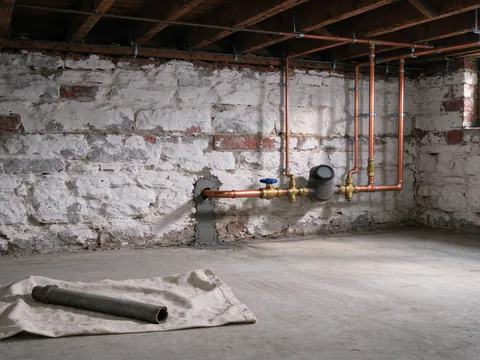
Two separate pipes meet at the meter. The service line runs from the curb stop under the sidewalk and through the front wall; in Philadelphia it belongs entirely to the property owner, curb stop included. The interior supply starts at the meter and main shutoff and branches to each fixture. A full repipe replaces that second system, and a partial repipe replaces part of it, such as the runs to one bathroom, which leaves the rest of the original pipe in service.
Homes divided into apartments add a third layer. In ZIP 19139, 19.9% of housing units sit in buildings of two to four units, and in 19104 more than 30% are in buildings of 20 or more, by the Census Bureau’s American Community Survey. Those shares describe the area, not any one address, but they explain why multi-unit repiping sits next to single-house work on this page. Where the street-side line is lead or galvanized and the pilot is not an option, lead service line replacement is a separate scope with its own permit.
A typical job, from the front-wall meter upward
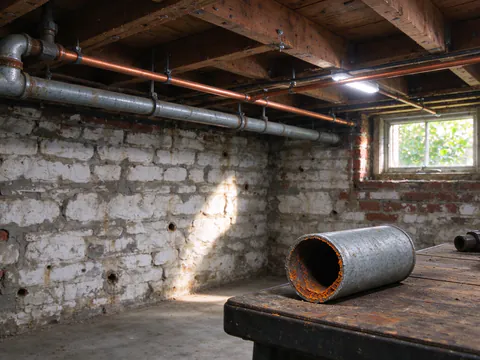
The first visit begins in the basement at the meter. The service line’s material is checked where it comes through the wall, because that one observation decides whether the pilot is relevant. Static pressure is read at the lowest tap and again at the highest fixture, with flow tested while a second tap runs. A sharp loss between floors points to restriction inside the house; weak flow everywhere points back toward the service line, the meter valve or a pressure-reducing valve.
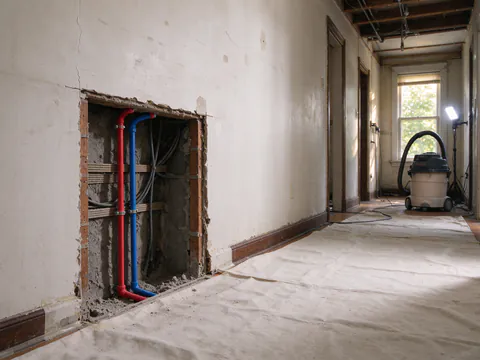
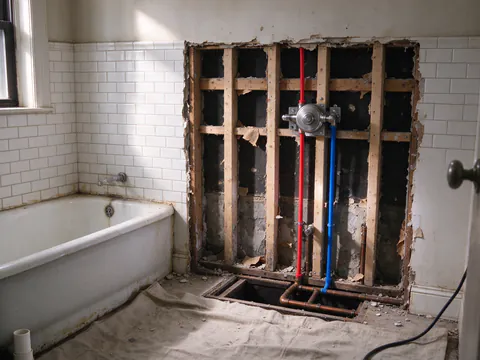
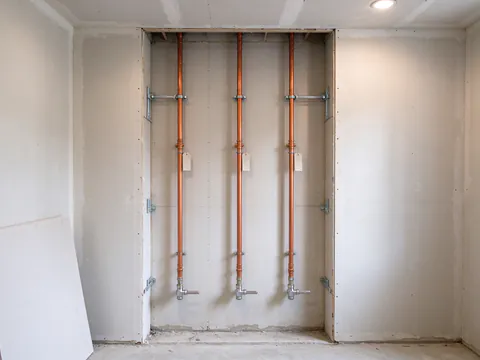
Next the route is mapped. In a twin, the supply may rise along the shared side wall to a bath at the back of the second floor; in a converted house, each unit’s branch is traced and counted separately. Openings are marked on paper before any are cut, and the written scope lists each one and who closes it. After the L&I permit is filed, new pipe goes in while the old system keeps the house supplied where the layout allows, so the water-off window falls at the cutover. The new system is pressure-tested and flushed before walls close, shutoffs are labeled, and L&I inspects.
Should you wait for Phase 2?
Waiting makes sense when three things are true: the service line looks like lead or galvanized steel, the interior pipe is not leaking, and the house is in one of the seven Phase 2 ZIPs. In that case, settling the service line first means the repipe connects to new pipe at the meter instead of to a line that may be dug up a few months later. The pilot program page is where owners check status and register; eligibility is PWD’s decision, and only the owner can give permission for the work.
Waiting makes less sense when interior pipe is already failing. A pinhole leak in a ceiling or a corroded fitting behind a vanity will not hold for a pilot schedule, and PWD’s pilot never touches piping inside the house. In that situation the repipe is planned with a clean tie-in point at the meter, ready for whatever happens on the street side. The guide to checking for a lead service line shows how to read the pipe at the wall, and the free lead line replacement guide compares every PWD route.
Own a home in 19142, 19143 or another Phase 2 ZIP?
Get the interior repipe planned around the pilot's timing, with the tie-in at the meter set out in writing.
Permit records in 19142 and 19143
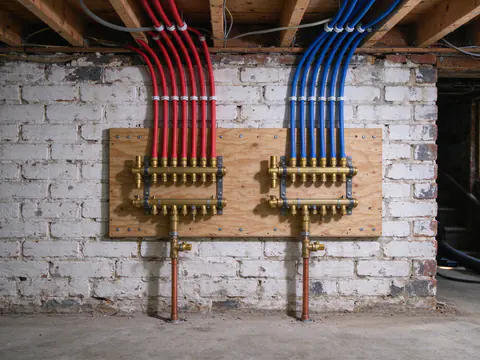
L&I permit data gives the clearest picture of what owners here are actually doing. Over the 36 months to October 2026, the seven Phase 2 ZIPs recorded 18 whole-house water-piping replacement permits, more than any other group of ZIPs in the city, along with 534 service-line permits. ZIP 19142 alone had 8 whole-house permits, tied with 19146 in South Philadelphia for the highest count, and 19143 had 153 service-line permits, tied with 19134 for the most of any ZIP. Citywide, the recurring L&I-approved template for these jobs names PEX: new PEX piping throughout a single-family dwelling.
These are permit counts, not a measure of how much old pipe remains. A permit records work someone chose to file; a rehab wave on one block can move the numbers as much as corrosion can. The Philadelphia repipe permit guide explains the filing and fees.
Twins, conversions and Schuylkill water
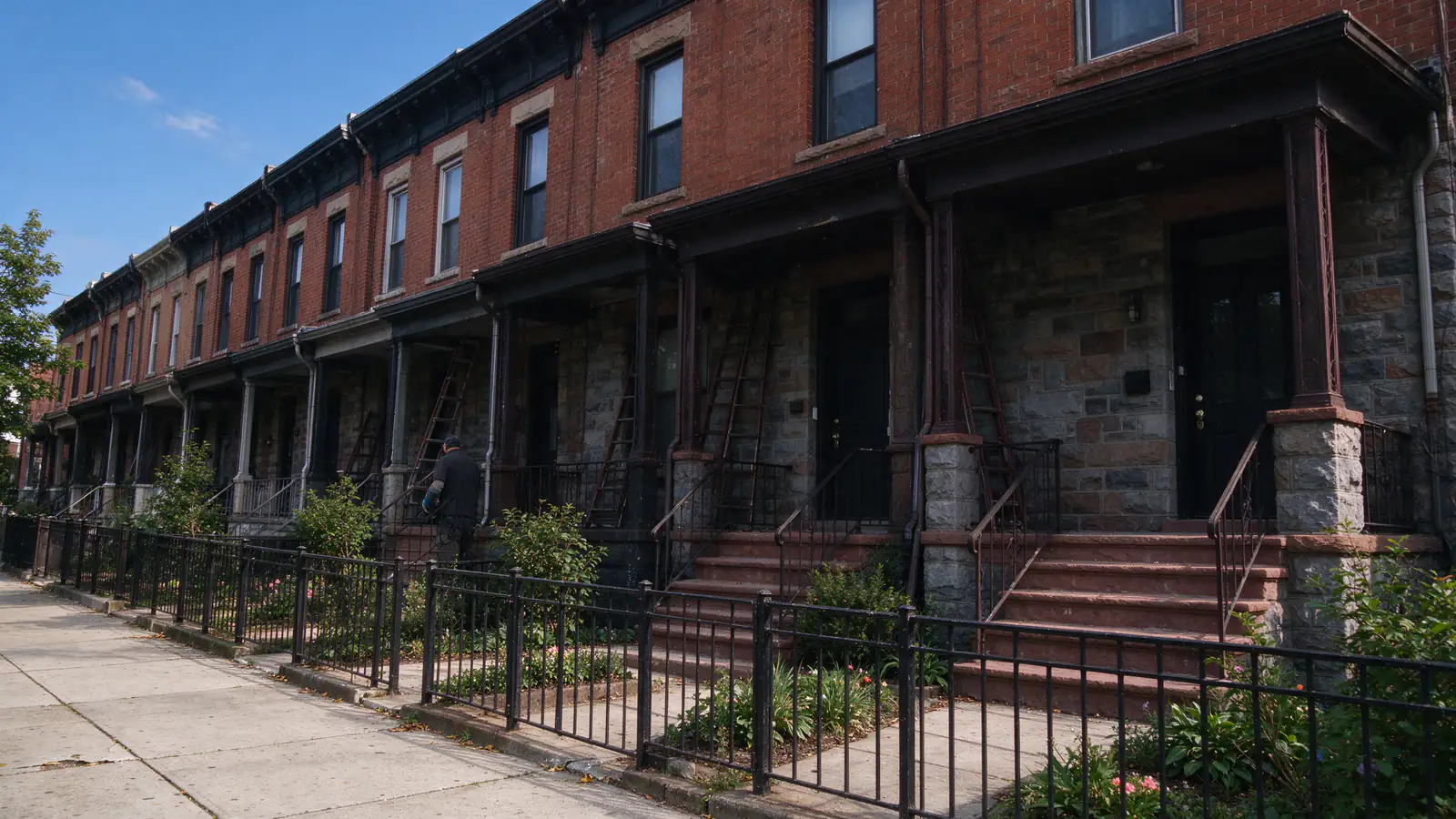
The housing here is old but more varied than in North Philadelphia. In 19143, 62.8% of homes were built before 1940; in 19142 the figure is 54.5%, with 76.9% single-family attached. Overbrook and Wynnefield, in 19151 and 19131, have later median build years of 1942 and 1949, and in 19153 around Eastwick fewer than 37% of homes predate 1960. A pre-war twin may still have galvanized steel inside, early copper or a mix left by repairs, so the basement is checked rather than assumed. The guide to identifying your water pipes explains the scratch and magnet tests.
PWD’s tap water reports list the two Schuylkill River plants, Belmont and Queen Lane, at average hardness of 151 and 169 ppm, against 101 ppm at the Delaware River plant; some areas get a blend, and PWD’s address lookup shows which plant serves a house. Hard water adds scale to the inside of old steel pipe. PWD’s zinc orthophosphate coats pipe walls to limit corrosion, but it cannot remove scale already built up. Where plastic is allowed, the Philadelphia code permits it in one- and two-family dwellings and apartments; the guide to whether PEX is allowed in Philadelphia covers the limits.
The reasoning behind the sequence
A pressure and flow reading comes before any verdict on the pipe, since the low water pressure guide lists several faults that produce the same weak shower. The service line is settled first in Phase 2 ZIPs because it is a separate permit, a separate owner decision and possibly a free one. Units are traced one at a time in converted houses because a shared, unlabeled supply is how one repair turns into a building-wide shutdown. The repiping cost guide for Philadelphia sets out the pricing drivers, from fixture count to patching.