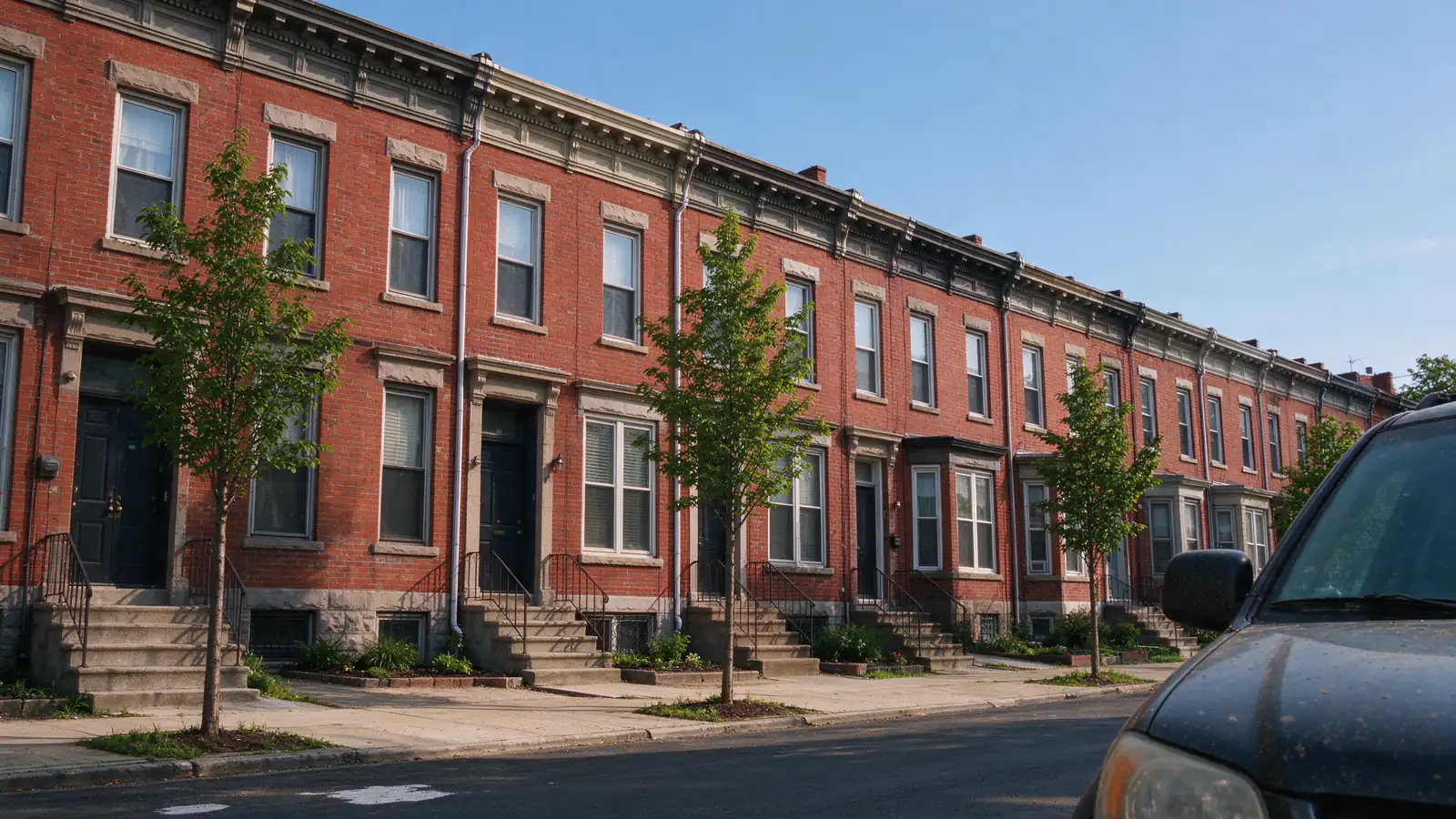
North Philadelphia has some of the oldest and most tightly packed housing in the city. In ZIP 19134, which takes in much of Kensington and Port Richmond, 71.6% of homes were built before 1940 and 80.2% are single-family attached houses, by the Census Bureau’s American Community Survey. Across 19133, 19134 and 19140 together, the figures are about 63.5% and 75.5%, against 39.9% and 55.6% for Philadelphia as a whole. Those numbers describe the stock, not any one house: a rowhouse rehabbed in the last twenty years may have no original piping left.
Philadelphia Freedom Repipe offers and manages whole-house repiping, rowhouse repiping and galvanized pipe replacement in North Philadelphia, with the work done by licensed and insured contractors; inside the city a licensed master plumber pulls the permit. These three ZIPs are also the first in the Philadelphia Water Department’s Service Line Replacement Pilot, which changes how a repipe here is sequenced.
Repiping services in North Philadelphia
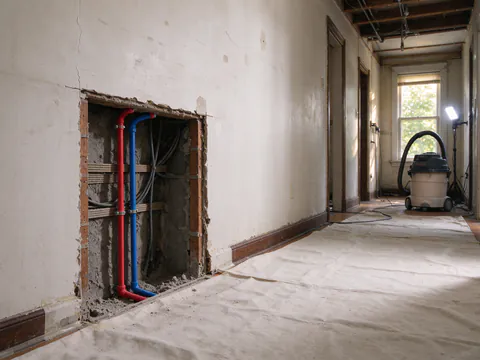
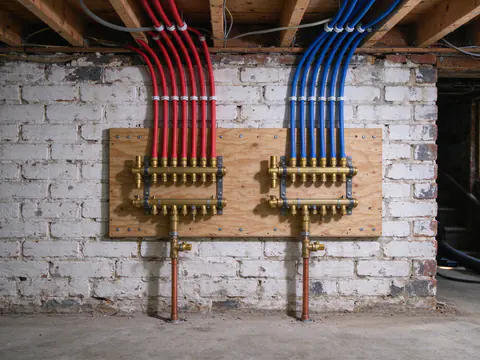
The interior repipe is the main job: new supply piping from the meter and main shutoff to every fixture and the water heater. In a rowhouse that usually means a main along the basement, a riser to the second floor and short branches to a kitchen at the back and a bath above it. The rowhouse repiping page covers that layout in detail, and the PEX repiping page explains why plastic is allowed in most houses here and where metal is still required. Where the old service line is lead or galvanized and the owner is paying for it, lead service line replacement is a separate scope with its own permit.
How a North Philadelphia repipe usually runs
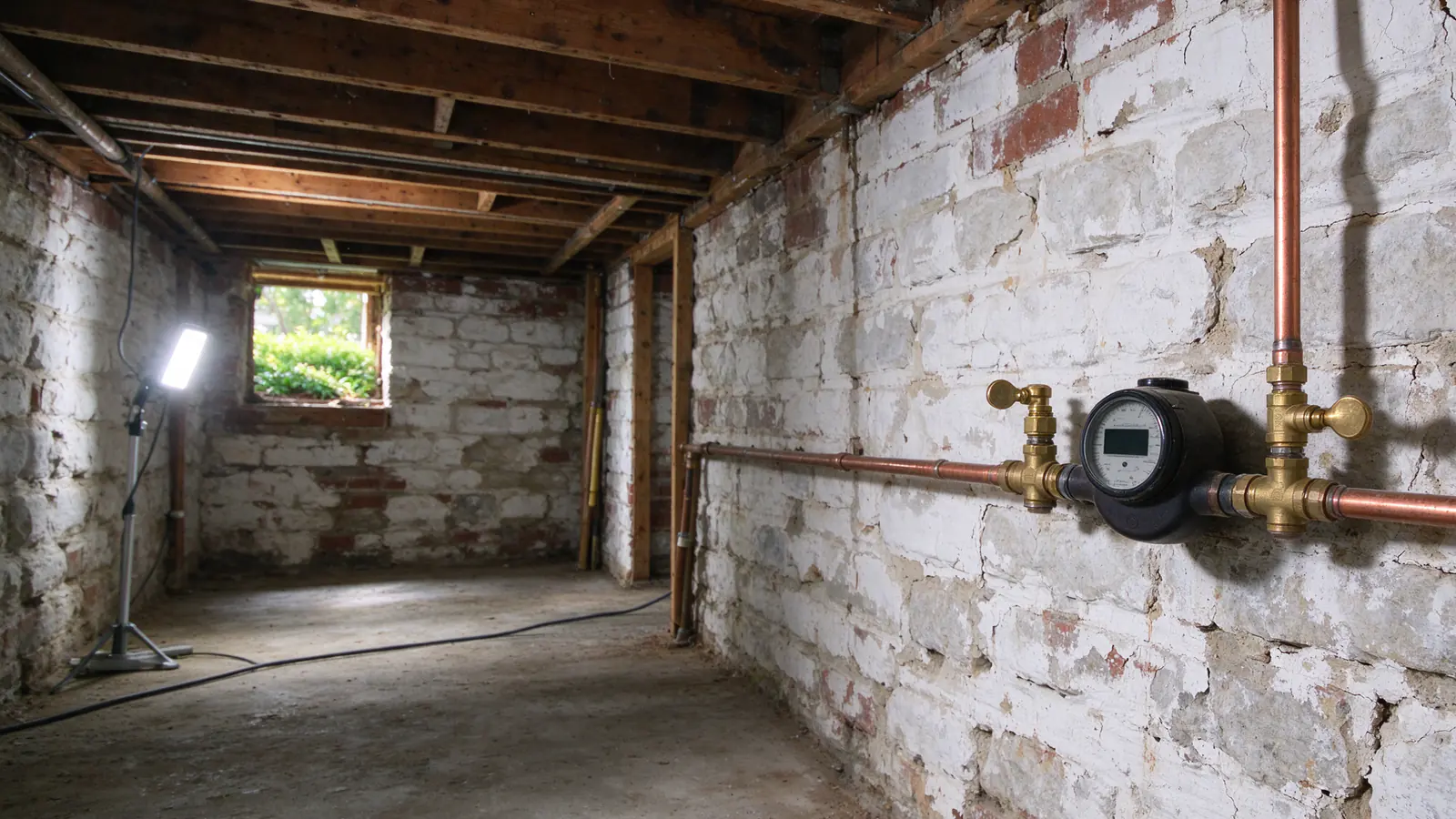
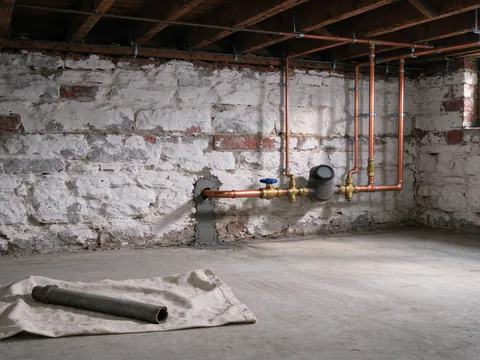
The first walk-through starts at the front wall of the basement, where the service line comes in and meets the meter. The material of that line is noted first, because it decides whether the house is part of a separate service line project. Static pressure and flow are read at the lowest and highest taps; a big drop between them points toward restricted interior pipe, while weak flow everywhere points back toward the service line, the meter valve or a pressure-reducing valve. Fixtures are counted, and the route up through the house is mapped: closets, the stair wall and any chase left by an earlier rehab.
The repipe then goes to L&I as a plumbing permit, filed under the licensed master plumber. New pipe is run with the old system still feeding the house where the layout allows, so the water-off window falls at the cutover rather than across the whole job. The new system is pressure-tested and flushed before walls close, the old galvanized is cut out or abandoned in place where it is buried, and L&I inspects. Wall and ceiling openings, and who closes them, belong in the written quote; the guide to living through a repipe explains what a typical day looks like.
Sequencing the repipe with the PWD pilot
The Service Line Replacement Pilot is federally funded and, in its first phase, covers ZIPs 19133, 19134 and 19140. The Philadelphia Water Department began outreach in June 2026 and started work that August; Phase 2 moves to West and Southwest Philadelphia. For eligible properties, licensed plumbers hired by PWD replace a lead or galvanized service line at no charge to the owner, usually in one day. Only the owner can give permission, and the line remains the owner’s responsibility afterward.
Eligibility is PWD’s call, not a contractor’s. Living in one of these ZIPs does not by itself mean a given house qualifies, so the pilot program page is the place to check and register. What matters for a repipe is order. The interior job starts where the service line ends, at the meter and main shutoff. If the service line is about to be replaced, the repipe is planned to tie into that new work, not quoted to include it. The guide to free lead line replacement in Philadelphia sets out each PWD route side by side.
Own a rowhouse in 19133, 19134 or 19140?
Get the interior repipe planned around the service line, starting from the meter at the front wall.
North Philadelphia housing, permits and water
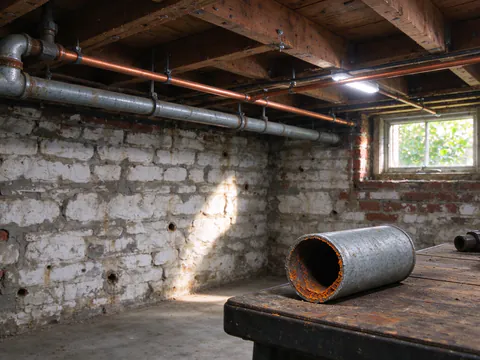
The housing explains most of the planning. Long blocks of attached brick houses put the meter at the front wall and the bathroom at the back of the second floor, so the supply runs the full depth of the house and then climbs. Where that path is still galvanized steel, it narrows from the inside as rust and scale build up, and the upstairs tap feels it first. The Philadelphia Plumbing Code also says water distribution pipe may not cross an adjoining property line, and each building on a street with a main needs its own connection. A shared line between neighbors is something to correct, not to copy. The guide to old water pipes in Philadelphia homes covers each pipe era and how to tell them apart.
The permit office is the same for every Philadelphia address. L&I issues plumbing permits under the 2018 Philadelphia Plumbing Code, built on the 2018 International Plumbing Code with local changes. Its EZ permits cover alterations in buildings with four or fewer dwellings up to four stories, which takes in most rowhouses here. Plastic water piping is allowed in one- and two-family dwellings and apartments, but North Philadelphia’s commercial corners are different: piping serving or inside other occupancies, such as a ground-floor shop, must be metallic under section P-605.4. The Philadelphia repipe permit guide walks through the fees.
The water itself comes from the Philadelphia Water Department, which adds zinc orthophosphate to form a protective coating inside pipes. That corrosion control does not undo decades of scale already inside galvanized steel. PWD also notes that lead from older plumbing can accumulate on the corroded walls of galvanized pipe. The utility owns none of the service line: residential lines in Philadelphia belong entirely to the property owner, curb stop included. In these three ZIPs, L&I recorded 355 service-line permits over the 36 months to October 2026, about 60 for every 10,000 homes and the highest rate of any part of the city. That count describes permits, not need, and the who owns the water line guide explains what the owner is responsible for.
Why the work is planned this way
The service line is settled before the interior is priced because it can be the real restriction, because it is a separate permit, and because in these ZIPs PWD may replace it at no cost. Pressure is read before pipe is blamed, since a choked line from the street or a failing valve can look exactly like corroded interior pipe. Every opening is listed in the quote because plaster walls and tiled baths are where repipes in old houses surprise people. The Philadelphia repiping cost guide shows how the range is built, and the guide to identifying your water pipes helps you check the basement before the first visit.