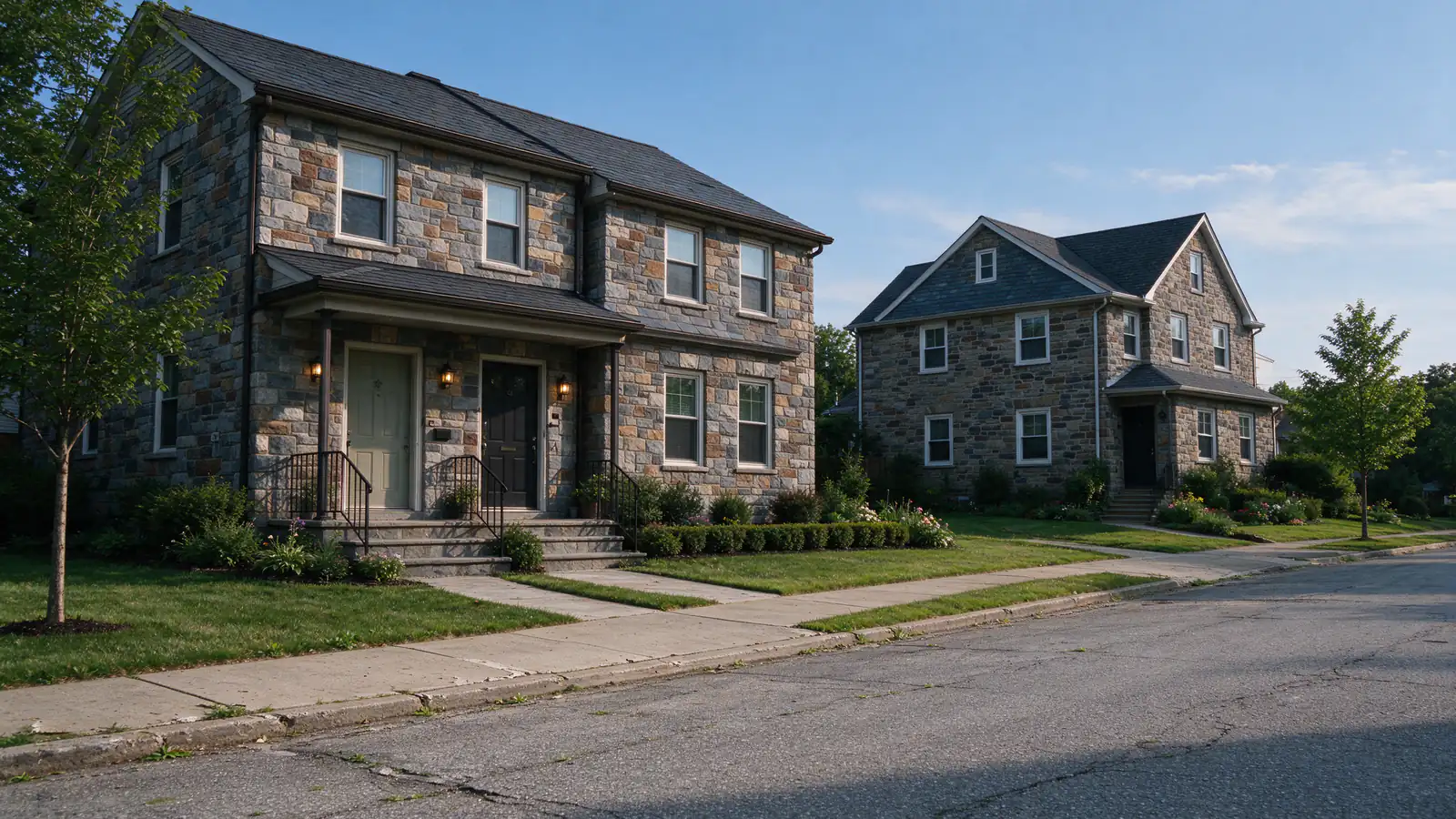
Cheltenham Township keeps its own plumbing chapter in local law, Chapter 209, Plumbing Standards, and licenses master, journeyman and apprentice plumbers itself. That puts a repipe in Elkins Park, Wyncote or the Cheltenham side of Glenside under three layers at once: Pennsylvania’s statewide code, the township’s chapter and the township’s licensing, with Aqua Pennsylvania on the far side of the curb stop.
Philadelphia Freedom Repipe plans and manages whole-house repiping, galvanized pipe replacement and copper repiping for Cheltenham houses, twins and condominium units. Licensed and insured contractors carry out the work, and each township or borough’s own permit and contractor rules apply. Because Cheltenham borders North and Northwest Philadelphia along Cheltenham Avenue, the rules on one side of the street are not the rules on the other, and the plan starts with which side the house is on.
Repipes, partial runs and the service line
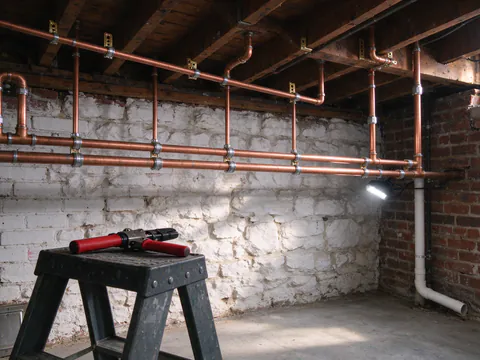
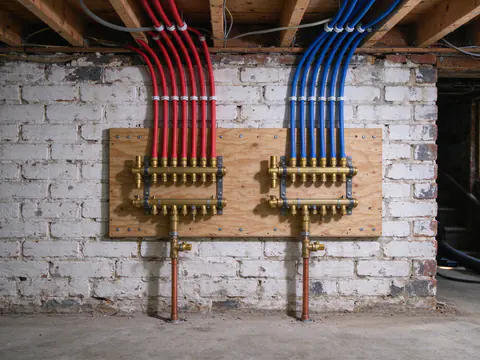
For a single or twin, the full scope is new supply piping from the meter and main shutoff to every fixture and the water heater. PEX repiping and copper both have a place: older homes here with long runs and plaster walls may favor flexible PEX, while some owners keep copper to match existing work. Where only one area has failed, a partial repipe replaces those runs and leaves the rest in service, which the scope should say plainly. Owners comparing a repipe with an epoxy liner can read the repipe versus pipe lining guide.
Apartment and condominium buildings are their own category. Multi-unit repiping of shared risers is a building decision, while a single unit’s branches can be replaced from that unit’s shutoff. The service line from the curb stop into the house belongs to the owner, and in Cheltenham, Aqua’s program may replace it if it is lead or galvanized, so it usually sits outside the repipe quote.
Order of work on a Cheltenham house
The first visit starts at the point where the service line enters and meets the meter. Its material is noted, since Aqua is still identifying many lines in the township. The main shutoff is tested, and static pressure and flow are read at the lowest and highest fixtures. A sharp loss between floors points to restriction in the house; weak flow at the basement tap points to the supply side or a valve.
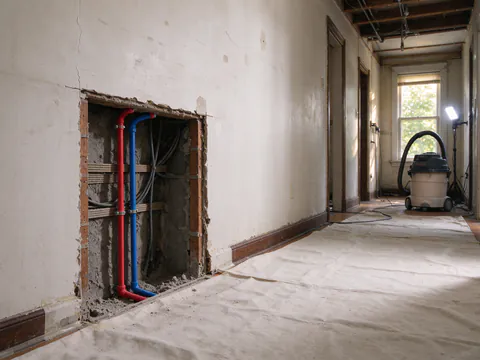
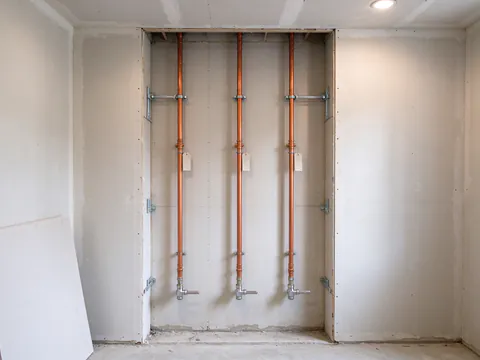
The route is then mapped. Larger pre-war houses may offer more paths than a Philadelphia rowhouse, such as back stairs, closets stacked over each other or an unfinished attic, but plaster walls and tiled baths still decide where openings go; the guide to repiping plaster walls covers how they are kept small. Each opening is listed in the written scope with who closes it. The township permit is filed, new pipe runs while the old system feeds the house where possible, and the new system is pressure-tested and flushed before walls close. Shutoffs are labeled, and the township inspects.
Aqua’s program and the 4,000 unknown lines
Cheltenham Township’s public water page states that public water in the township is provided by Aqua Pennsylvania. Under Aqua’s Customer Lead Service Line Replacement Program, once a customer-owned line is identified as lead or galvanized, Aqua replaces that portion and restores the property at no direct cost to the customer. Aqua owns the section from the main to the curb stop.
The township page also notes that the material of about 35% of Cheltenham’s customer service lines, roughly 4,000 services, is unknown, against about 23% across Aqua’s Pennsylvania system. Aqua mails surveys only to customers with an unknown material. For a repipe, that unknown matters: a line that may soon be replaced by Aqua should not be priced into an interior job, and the tie-in at the meter is planned around Aqua’s timing. Eligibility and scheduling are Aqua’s decisions.
Repiping a home in Elkins Park, Wyncote or Glenside?
Get an interior scope that follows Cheltenham's permit rules and leaves the service line to Aqua where its program applies.
Chapter 209, township licenses and fees
The township’s fee schedule lists master, journeyman and apprentice plumber licenses and a plumbing permit for work within the building envelope, charged on a sliding scale by the cost of the work; sewer lateral repair or replacement is a separate permit, charged as a share of the project cost. The township’s permits page lists plumbing among the work that needs a permit, requires a signed copy of the contract between the contractor and the property owner with every application, and charges triple the permit fee for work started before a permit is approved.
The statewide layer is the Uniform Construction Code, which adopted the 2021 International Plumbing Code in its entirety, effective January 1, 2026. Philadelphia’s local amendments, such as metallic pipe for shops and other non-dwelling occupancies, stop at Cheltenham Avenue.
Older singles, twins and apartment buildings
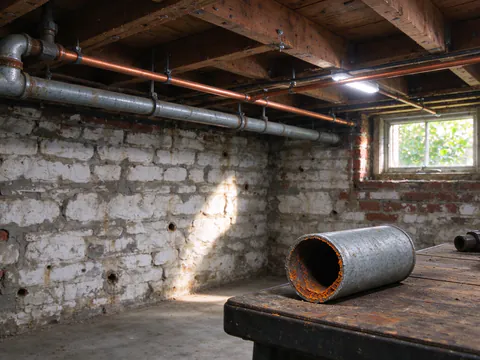
By the Census Bureau’s American Community Survey, Cheltenham’s 15,394 homes are 45.9% detached singles and 14.4% attached, with 21.5% in buildings of 20 or more units. Some 29.1% were built before 1940 and 63.6% before 1960, with a median build year of 1954. That mix is unlike the rowhouse blocks across the city line. A single from the 1920s may hold galvanized steel, early copper or a mix from past remodels, and early copper can develop pinhole leaks for reasons that have nothing to do with age alone. The guide to identifying your water pipes explains how to check what is there.
Abington Township, to the north, is a separate permit office. It is also served by Aqua, and its plumbing permits must be submitted by a master plumber or journeyman registered with Abington. Its homes are newer and mostly detached, with 19.2% built before 1940 and 67.9% detached singles.
Why the township comes first
Cheltenham’s own chapter, licenses and contract requirement decide who can file and what the application must contain, so they shape the plan before any pipe does. Aqua’s role is the second question, since the service line may be its job. A gauge on the basement tap and one on the top floor separate a street-side supply problem from a scaled interior before anything is priced. Questions about lead at the tap belong with the utility’s water quality reports, and the guide to lead in tap water explains how household plumbing contributes. The repiping cost guide shows how a price is built within the range.