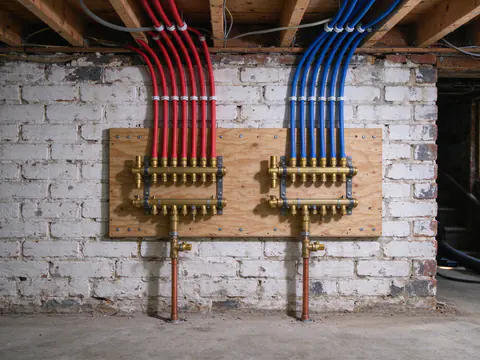
Philadelphia Freedom Repipe replaces corroded galvanized steel water pipe in Philadelphia houses and in nearby Delaware, Montgomery and Bucks County suburbs. Galvanized steel was the ordinary supply pipe for much of the city’s housing, and much of it is still in service. The job is to find where the steel runs, take it out of service in the right order, join any section that stays with a fitting that will not start a new corrosion problem, and flush the house so the scale knocked loose during the work does not settle in the faucets. Licensed and insured contractors carry out the work; inside the city, a Philadelphia licensed master plumber oversees the job and pulls the L&I permit.
Galvanized replacement overlaps a whole-house repipe when every steel run goes, and a partial repipe when only some of it does. What sets it apart is the steel itself: how it fails, what it leaves behind, and what has to happen at the joints where old meets new.
How galvanized steel fails from the inside
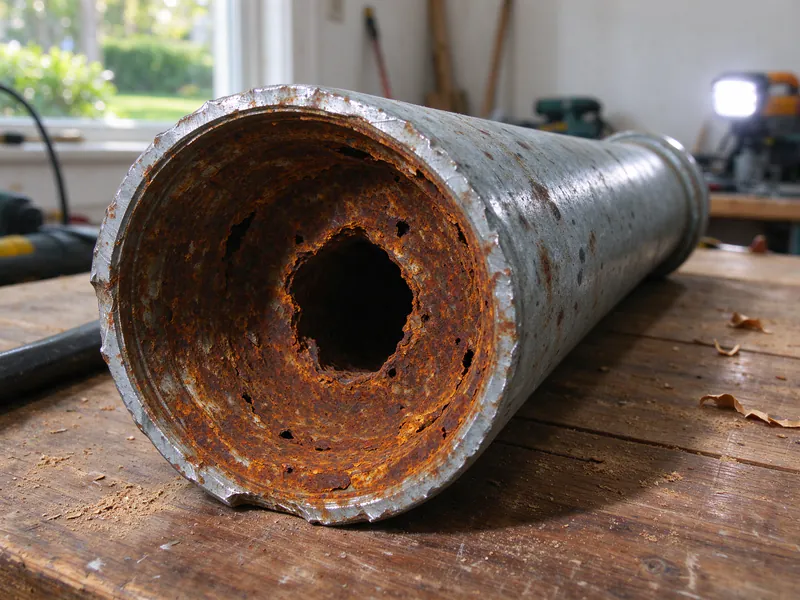
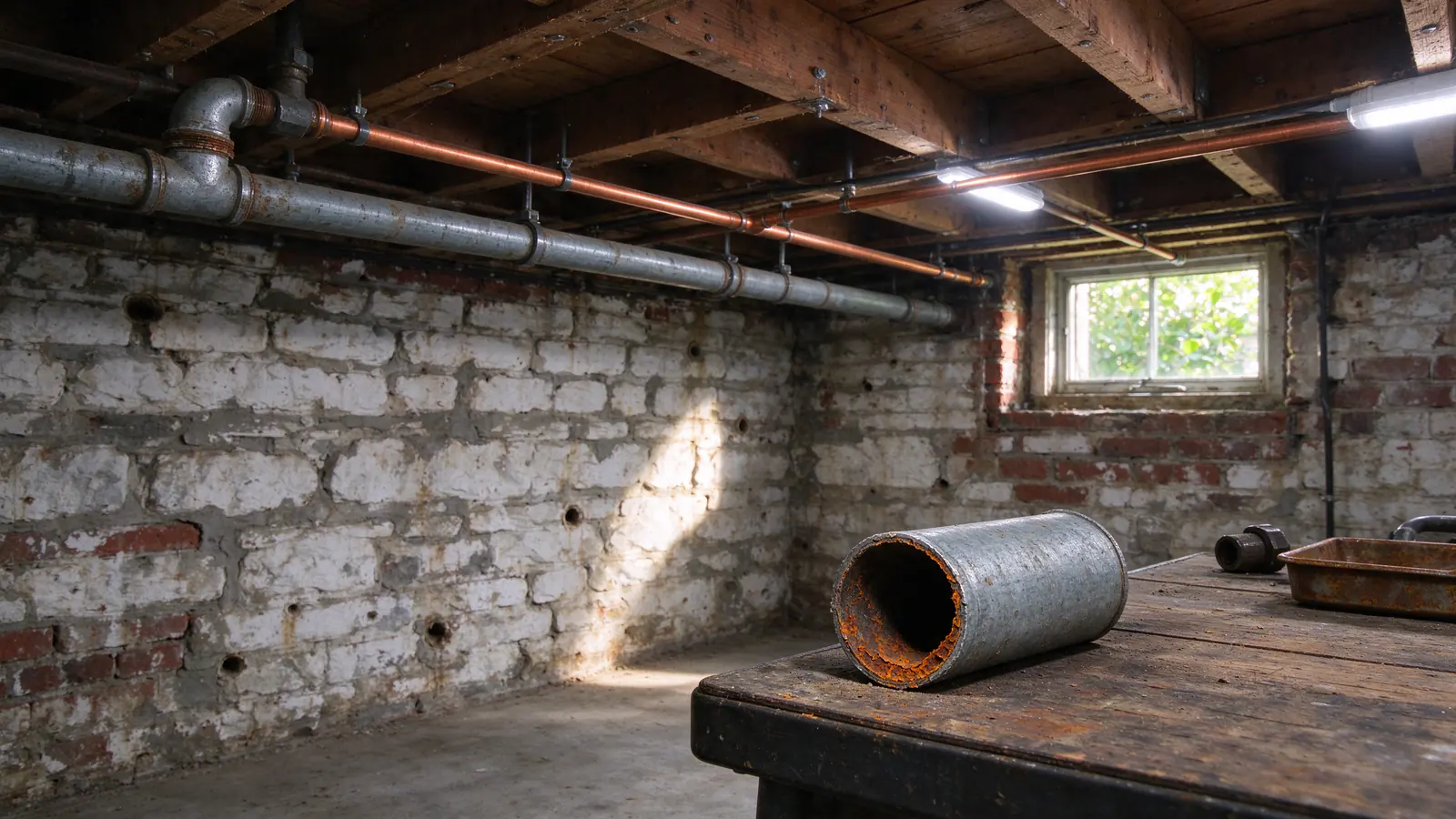
Galvanized pipe is steel coated in zinc. The zinc slows rust for a while, then wears through, and the bare steel corrodes where water touches it. Rust and mineral scale build up on the inside wall, rough and uneven, so the bore narrows year after year while the outside of the pipe can still look clean and gray. That is why a house can have no leaks at all and still have a shower that fades when someone opens the kitchen tap.
Threads are the weak points. Cutting a pipe thread removes part of the wall, and the thinnest steel in the system sits inside every elbow and coupling. Those joints usually rust through first, often inside a ceiling or behind a vanity. Repairs make it worse over time: turning one seized fitting can crack the next one along, so a small fix can grow into three openings and a conversation about the rest of the pipe.
Philadelphia has a lot of pipe this old. By Census figures, 64.9% of the city’s housing units were built before 1960 and the median year built is 1949. In ZIP code 19134, 71.6% of homes were built before 1940. L&I permit text rarely names the material being taken out, so there is no count of how many houses still run on steel inside. The guide to identifying your water pipes shows how to tell galvanized from copper, lead and plastic at the meter and in the basement.
Lead that collects on corroded steel
There is a second reason Philadelphia owners look at galvanized pipe. The Philadelphia Water Department says that over decades, lead from a property’s plumbing can accumulate on the corroded walls of galvanized pipes. The rough scale inside old steel gives particles a place to settle, and a change in flow or a disturbance during a repair can release some of them. PWD also notes that lead can be hidden in older plumbing work, including solder, fittings, faucets and brass.
The usual source upstream is the service line. PWD’s published inventory listed 1,189 galvanized and 14,272 lead service lines, with 436,341 lines of unknown material that PWD says should be treated as lead until shown otherwise. A galvanized interior fed by an old service line is the pattern PWD describes. Replacing the steel inside removes that collecting surface, but it does not change the service line, and it is not a promise about what comes out of the tap. Testing and the service line are covered on the lead service line replacement page and in the guide to lead in Philadelphia tap water.
PWD’s corrosion control also matters here. The department adds zinc orthophosphate, which forms a protective coating inside pipes. That coating helps, but it builds on the surface the pipe already has, and in old steel that surface is scale.
Why new pipe will not always fix the pressure
Replacing restricted steel removes one cause of low flow. It is not the only one, and a page that sells galvanized replacement as a guaranteed pressure fix is skipping steps. Before any pipe is cut, static pressure is read at a hose bibb or test point and flow is compared at the lowest and highest fixtures with two taps open. Then the other suspects are checked:
- The service line. Most service line permits in the city specify 3/4 inch pipe, but older services can be smaller, and a corroded galvanized or lead service limits everything downstream. New interior pipe cannot carry more water than the service delivers.
- The main shutoff. Older houses often have a globe-style main valve, which restricts flow even when fully open, or a gate valve that no longer opens all the way.
- A pressure-reducing valve set low or failing, where one exists.
- The fixtures. Clogged aerators, old shower valves and toilet fill valves restrict flow on their own.
If the readings point to the service line or the shutoff, that work comes first or alongside, and the main water shutoff replacement page explains the valve side. The guide to low water pressure in Philadelphia walks through the same checks in more depth.
Transitions where old steel stays
Not every job replaces every foot of steel. When some galvanized pipe stays, the connection between old and new decides how long the next stretch of steel lasts.
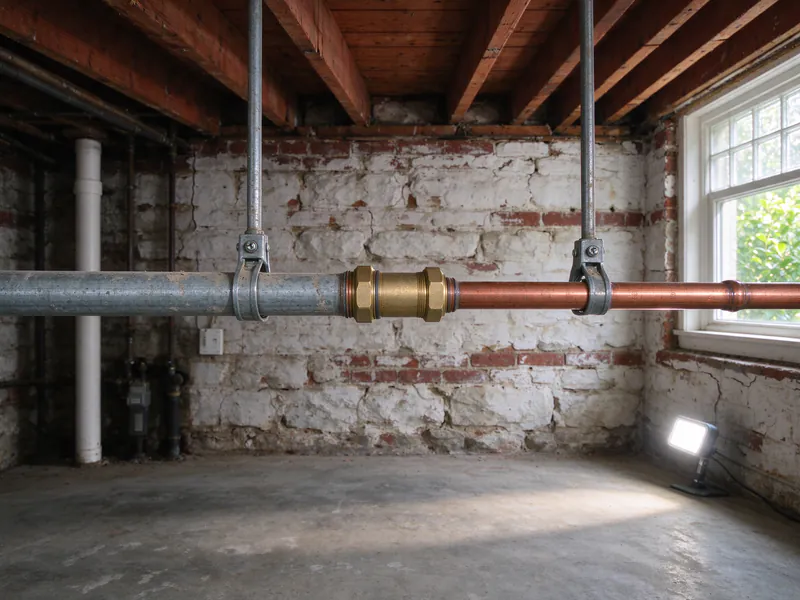
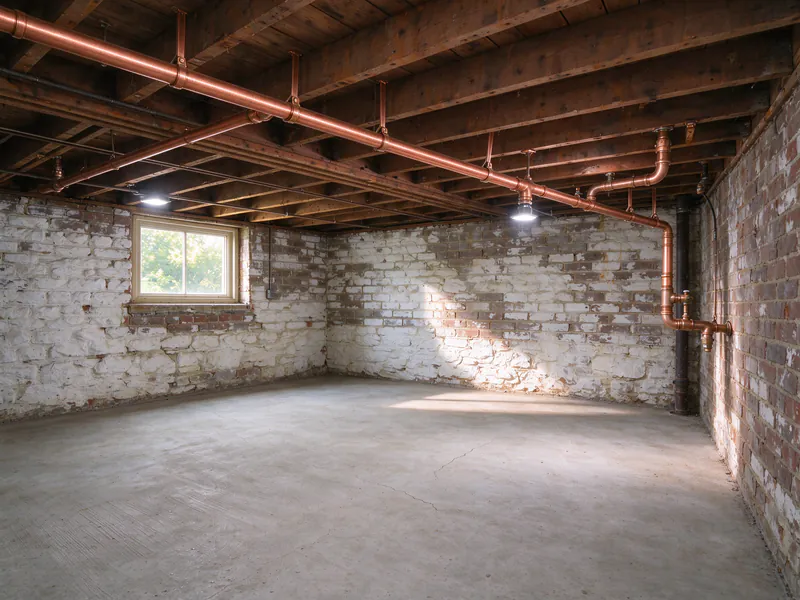
Copper and steel touching in water form a galvanic pair, and the steel corrodes faster at the joint. A listed dielectric union, or a brass or bronze fitting between the two, separates them. PEX does not cause that reaction, but it still meets steel through a threaded brass adapter, and the thread on the old pipe has to be sound enough to hold. That usually means cutting back past a corroded fitting to clean steel and cutting a fresh thread, or replacing the steel up to the next solid joint.
Every transition left in the house goes into the written scope with its location, so the next person who opens that wall knows what they are looking at. A house that is part new and part old is described that way, not as repiped.
Not sure how much of the pipe is steel?
A walk-through marks every steel run, every earlier repair and every place old and new would meet.
Removed or abandoned in place
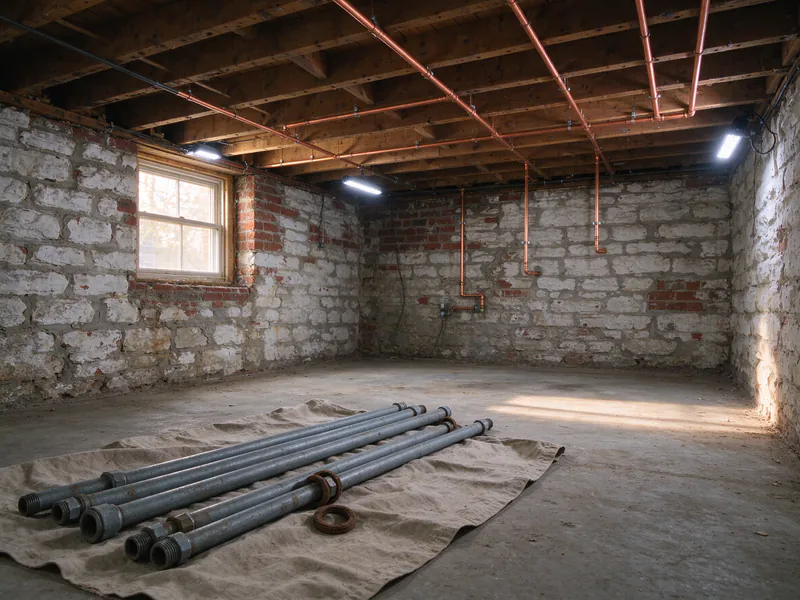
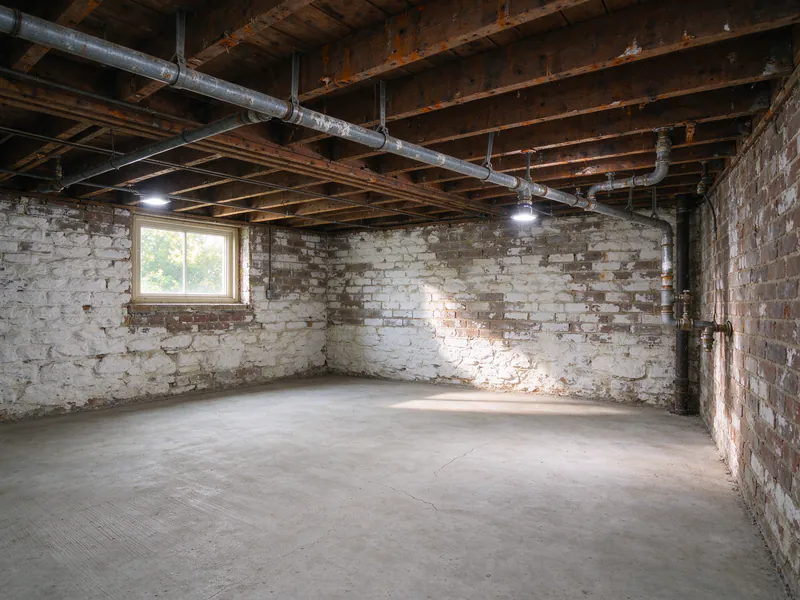
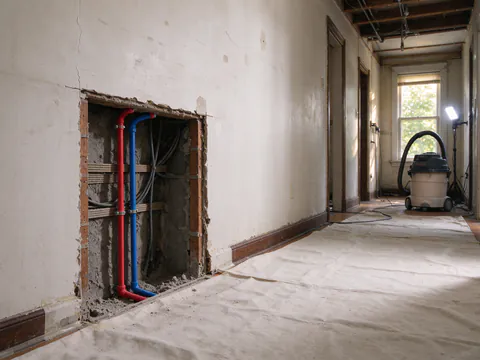
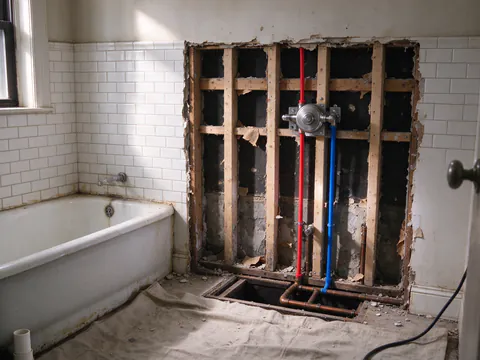
Galvanized pipe in an open basement ceiling is usually taken out: it is accessible, it is heavy, and leaving it invites a future plumber to mistake it for live pipe. Steel inside plaster walls and floors is a different call. Pulling it out can mean opening the whole run, so it is often cut at both ends, capped and left in place, fully disconnected from the water supply. The quote should say which runs come out and which stay in the walls. The guide to repiping plaster walls explains how openings are placed.
Flushing loosened scale after the cutover
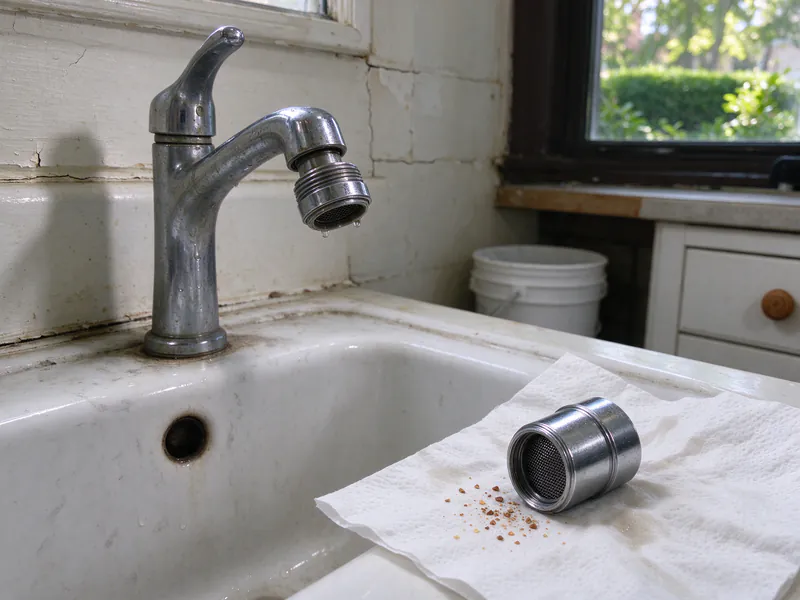
Cutting into steel shakes scale loose. Some of it falls into the new pipe at the transition points, and some stays in whatever old steel remains. After the new lines are tested and connected, the house is flushed with the aerators off, starting at the lowest fixture and working up. Aerators, shower cartridges, toilet fill valves and washing machine inlet screens are checked and cleaned, and the water heater drain is opened if debris may have reached it. Rusty water after the work usually clears with flushing; brown water that persists can come from the water heater or from work on the street main, which the guide to rusty water in Philadelphia helps sort out.
Permit, material and what the job covers
Replacing water piping in Philadelphia needs an L&I permit. For a one- or two-family dwelling, L&I lists $37 for repair or replacement of water lines with no fixtures, and $50 for alterations covering the first 7 fixtures plus $22.50 for each additional one. Steel can be replaced in PEX or copper in a house; a property with a store or other non-residential use needs metallic pipe for that space under Philadelphia’s code, which the copper repiping page explains. The Philadelphia repipe permit guide covers the application and inspection, and anyone buying a house with steel pipe can start with the guide to buying a Philadelphia house with old pipes.
Related resources
- How much repiping costs in Philadelphia and what moves the number
- Repipe vs pipe lining for steel that is not yet leaking
- PEX repiping, the material most recent Philadelphia repipe permits name
- Old water pipes in Philadelphia homes, the full background