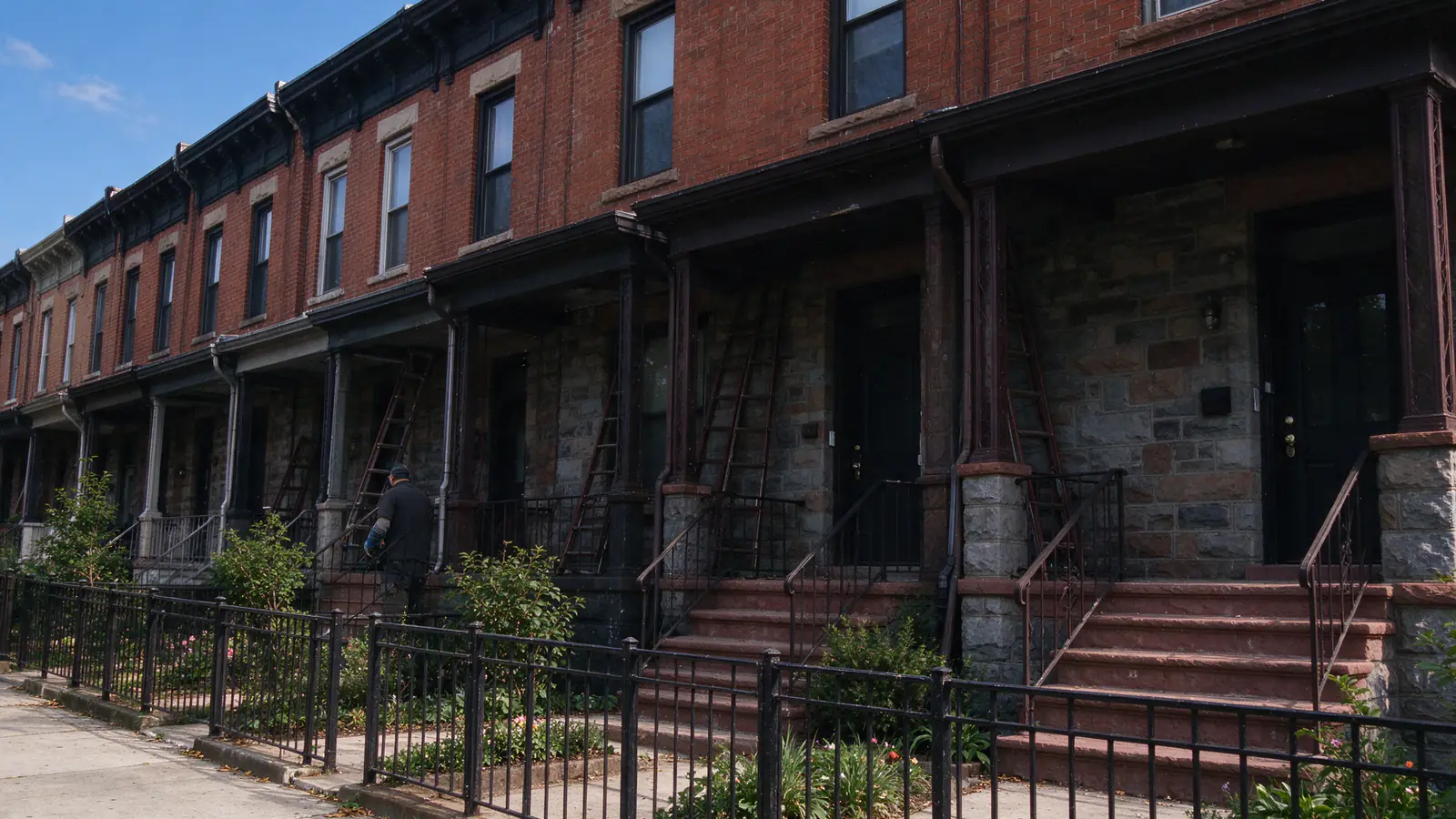
Yes, you can buy a Philadelphia house with old galvanized or lead pipes, as long as you price the pipe into the deal. Old supply piping is common in a city where 39.9% of housing units were built in 1939 or earlier, by Census figures. What matters is knowing which parts are old, how they are behaving, and roughly what replacing them would involve, before the agreement is final.
Philadelphia Freedom Repipe replaces water supply piping and service lines in Philadelphia and nearby Delaware, Montgomery and Bucks County suburbs. This guide is for buyers: what to look at, how to check the service line, and how to turn what you find into a written scope you can negotiate with. The guide to old water pipes in Philadelphia homes goes deeper into each material.
Two different pipe questions
A house has two kinds of water pipe, and they are separate problems with separate costs.
The service line runs from the water main under the street, through the curb stop and under the sidewalk, into the house through the front or foundation wall to the meter. In Philadelphia the property owner owns all of it, including the curb stop, so once you close it is yours; the guide to who owns the water line sets out the boundaries. Old service lines can be lead or galvanized.
The interior piping runs from the main shutoff by the meter to the water heater and every fixture. In older houses it can be galvanized steel, copper, a patchwork of both, or PEX from a recent renovation.
A seller’s note that the plumbing was updated may mean either, or only part of one. Ask which.
What to look at during a showing
Start in the basement, usually at the front wall, where the service enters to the meter and main shutoff.
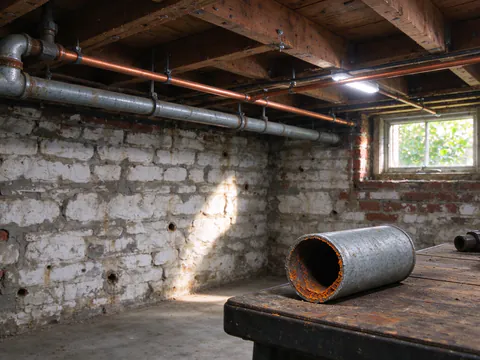
- The pipe coming through the wall. Lead is dull gray and soft, often with a rounded bulge at a joint, and a light scratch shows shiny silver. Galvanized steel is gray, magnetic and threaded. Copper is the color of a penny where scratched. The EPA’s Protect Your Tap quick check describes the scratch and magnet test, which a buyer can ask permission to try.
- The main shutoff. An old, corroded or globe-style valve may not close fully, and replacing it means closing the curb stop outside; the main water shutoff replacement page explains that job.
- The pipe leaving the meter. Follow it toward the water heater and up. Threaded gray pipe throughout points to galvanized; a mix of copper and steel points to past spot repairs.
- Flow upstairs. Run the top-floor shower, then open the kitchen tap. A shower that fades badly suggests restriction somewhere, though the cause could be the pipe, the service line, a valve or the fixture.
- First-draw color. Brown or rusty water on first draw is a common galvanized sign, but a water heater or recent street work can cause it too.
What a home inspection does and does not tell you
A general home inspection typically reports visible pipe materials, active leaks and water pressure at fixtures. It usually does not trace the buried service line or open walls. If the inspector reports galvanized supply pipe or a possible lead service line, consider a dedicated plumbing assessment during the inspection period. PWD itself notes that a licensed and insured plumber can inspect your pipes and other plumbing for lead or steel. That visit should end with what was found on each floor, pressure and flow readings, and a written scope with a price.
Checking the service line before closing
PWD publishes a service line map searchable by address. When PWD published its inventory, it listed 14,272 lead lines, 1,189 galvanized, 73,373 non-lead and 436,341 unknown, and PWD estimates that about one in 20 Philadelphia properties may have a lead service line. PWD now labels unknowns as incomplete records and says they should be treated as a lead service line. So a map result of “incomplete records” is not reassurance; it is a question to check at the basement wall. The guide to checking for a lead service line shows how to read the map.
If the line is lead or galvanized, the routes after closing depend on where the house is. PWD’s Service Line Replacement Pilot replaces lead and galvanized lines free in its listed ZIPs, starting in North Philadelphia; PWD also replaces them during planned water main projects on a block. Outside those, the owner pays, and PWD’s HELP loan offers a 0% loan to eligible owners. Eligibility for any program is PWD’s decision, and none of them pays for interior piping. The free lead line replacement guide covers each route.
In the suburbs, Aqua Pennsylvania and Pennsylvania American Water replace customer-owned lead or galvanized lines at no direct cost once a line is identified, so the service line question there is mostly about timing.
Turning findings into a negotiation
Pipe findings are easiest to negotiate when they come as a written scope and a number rather than a worry. Two published ranges help frame it:
| Work | Typical range | Source of the range |
|---|---|---|
| Whole-house repipe, single-family house or rowhouse | $4,000 to $15,000+; larger homes and copper jobs can pass $20,000 | Philadelphia-area range |
| Owner-side water service line, private plumber | $3,000 to $12,000, more with a street opening | Philadelphia Water Department estimate |
A scope from a walk-through narrows those to the house in front of you. With it, a buyer can ask for a price reduction, a seller credit, or for the seller to complete the work with a permit before closing. If the seller does the work, ask for the L&I permit record, the written scope and the pressure test result, so you know what was replaced and what was left. A partial job is not a full repipe, and the partial repiping page explains what to ask about the boundary.
Does a repipe add value at resale?
Homeowners ask this often, and the honest answer is that no reliable local figure shows how much a repipe adds to a sale price. It is better thought of as removing a problem than adding a feature. A house with galvanized throughout gives the next buyer’s inspector something to price against the seller; a house with new piping, a permit on record and labeled shutoffs does not. The same goes for a known lead service line: a replacement record answers a question a buyer will otherwise ask. The galvanized pipe replacement page and the repiping cost guide explain what the work involves and what moves the price.
A buyer’s short checklist
- Look up the address on PWD’s service line map.
- Look at the pipe entering the basement and leaving the meter.
- Test flow at the top floor with a second tap open.
- Ask the seller what plumbing work was done and whether it had a permit.
- Get a written scope and price for any pipe work before the inspection period ends.
The repipe quote checklist lists what a good scope should contain, and the lead service line replacement page covers the outside work.