Philadelphia Freedom Repipe replaces part of a house’s water supply piping when only part of it needs to go: one bathroom group, one riser, the basement main or the hot side alone. That can be the right scope. It can also be a way of paying for openings twice. What makes a partial repipe sound is a clear boundary, a good joint at every point where new meets old, and an honest written record of the old pipe still in service. Licensed and insured contractors carry out the work; inside the city, a Philadelphia licensed master plumber oversees the job and pulls the L&I permit.
A partial repipe is not a whole-house repipe, and the paperwork should never blur the two. A house with a new bathroom branch and decades-old steel everywhere else is partly repiped, and it should be described that way to the owner, the inspector and any future buyer.
Defining the boundary
Every partial repipe starts with the whole system, not only the part that is failing. The walk-through traces the pipe from the main shutoff to each floor, records the material on every run, marks earlier repairs and reads pressure and flow. Only then can a boundary be drawn in the right place.
A good boundary follows the way water moves. It starts at a point where the pipe upstream is sound enough to keep in service, such as a copper main that was replaced years ago or a riser that still flows well, and ends at the fixtures. A boundary drawn in the middle of corroded steel just moves the next leak a few feet down the line. Where the boundary falls, a shutoff often goes in too, so the old section can be isolated later without shutting down the whole house.
The written scope names the boundary by room and line: “hot and cold from the basement main tee to the second-floor bathroom fixtures”, not “upstairs plumbing”. L&I’s permit records show this kind of job is common. Over 36 months, 223 permits replaced the supply lines for a named fixture group such as a bathroom or kitchen, against 52 whole-house or explicit water piping replacements.
What stays, and why it goes in writing
Retained pipe is the part of a partial job that people forget. A partial repipe leaves old pipe in service by definition, and that pipe keeps aging. The quote and the closing paperwork should list each run that stays, its material, where it is and how it connects to the new work. That record does three things. It keeps the owner from believing the house is fully repiped. It tells the next plumber which pipe is old before they open a wall. And it answers the question a buyer’s inspector will ask. The guide to buying a Philadelphia house with old pipes shows why that matters at sale.
Transitions between new and old
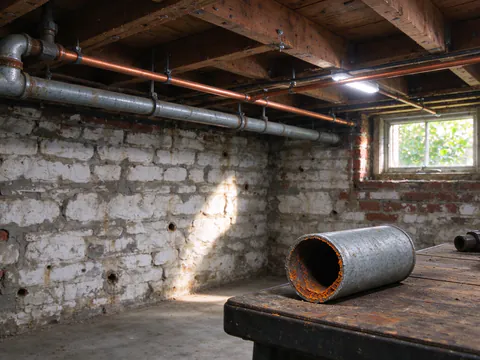
Every boundary is a joint between two materials, and those joints need care. Copper joined to galvanized steel needs a listed dielectric union or a brass or bronze fitting between them, because the two metals touching in water speed corrosion of the steel. PEX joins steel or copper through a listed brass adapter. In either case the joint is made on sound pipe: the old side is cut back past corroded fittings, and a fresh thread or a clean end is made.
Disturbing old pipe has side effects. Cutting into galvanized steel shakes loose scale that can travel downstream, and turning old fittings can crack the next joint. A partial repipe plan accounts for that with flushing after the cutover, a check of aerators and valves, and a look at the old joints nearest the boundary. The galvanized pipe replacement page covers transitions to steel in more detail.
Where would a sensible boundary fall in your house?
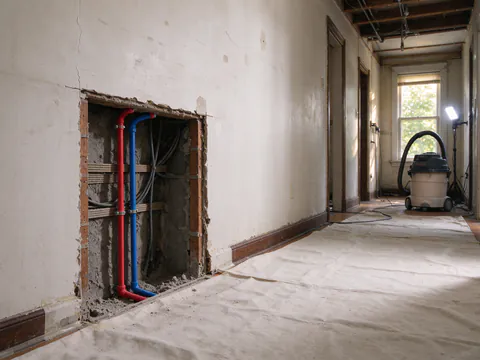
The walk-through surveys every run first, then marks where new work would start and what would stay.
When partial makes sense
A partial repipe tends to fit when the trouble is clearly local and the rest of the system is in reasonable shape:
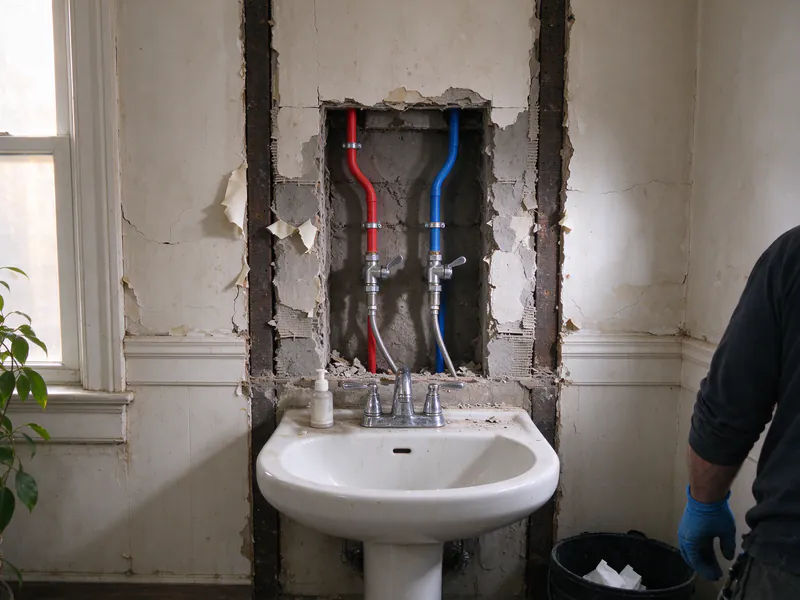
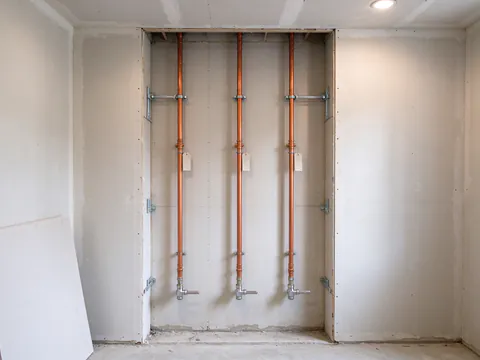
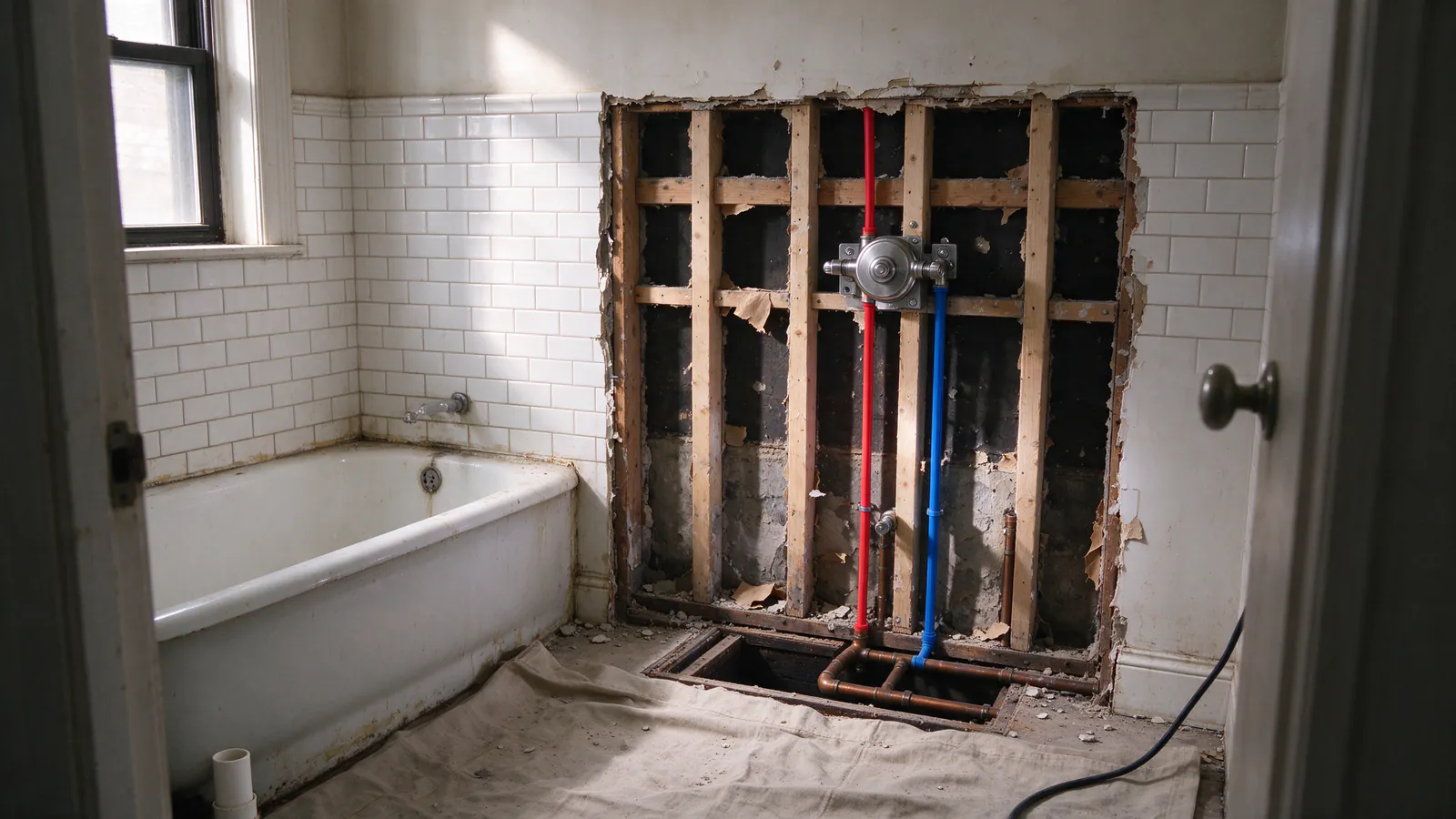
- One bathroom during a remodel. The walls are open anyway, so replacing the branch lines costs little extra in openings, and the riser feeding the room flows well.
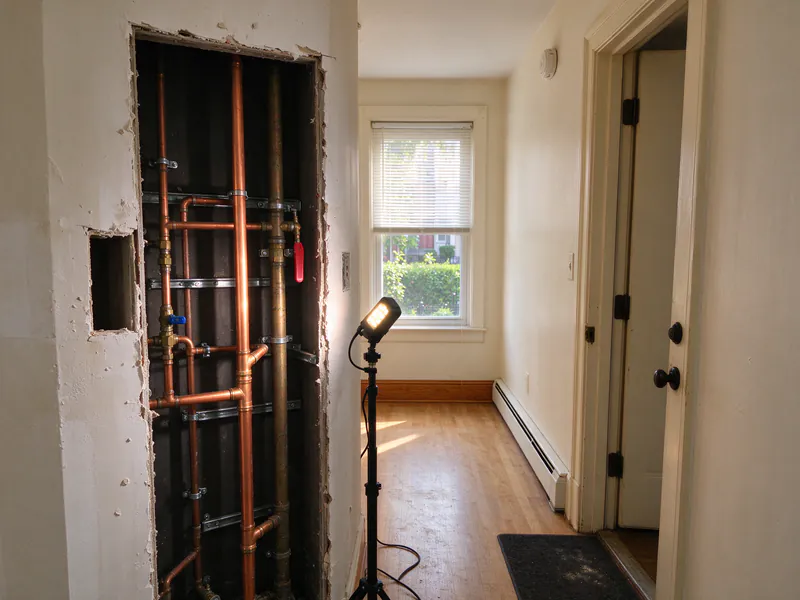
- One riser in a house or small building. A single vertical run is restricted or leaking while the basement main has already been replaced. In multi-unit buildings this is the stack-by-stack approach covered on the multi-unit repiping page.
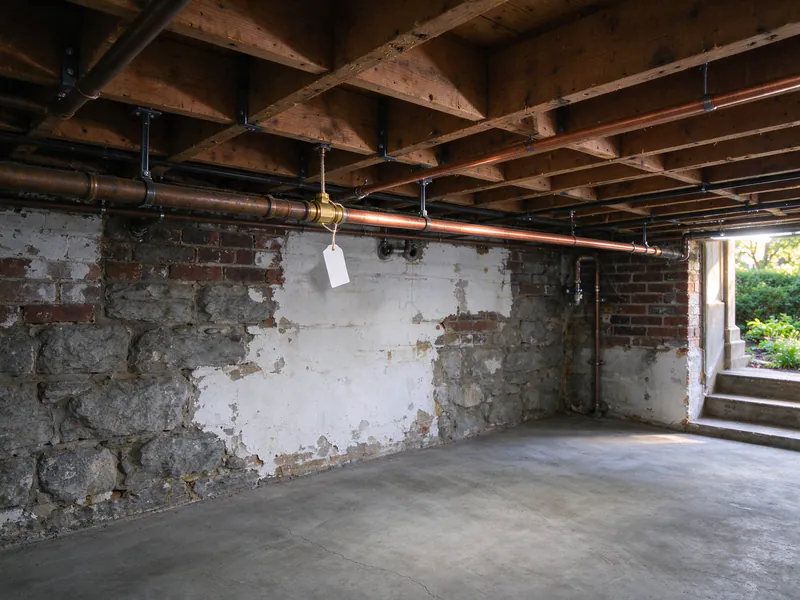
- The basement main. The basement main carries all the water the house uses, so restriction there is felt at every fixture, and with the joists open it is the least disruptive part to replace, often paired with a new main shutoff.
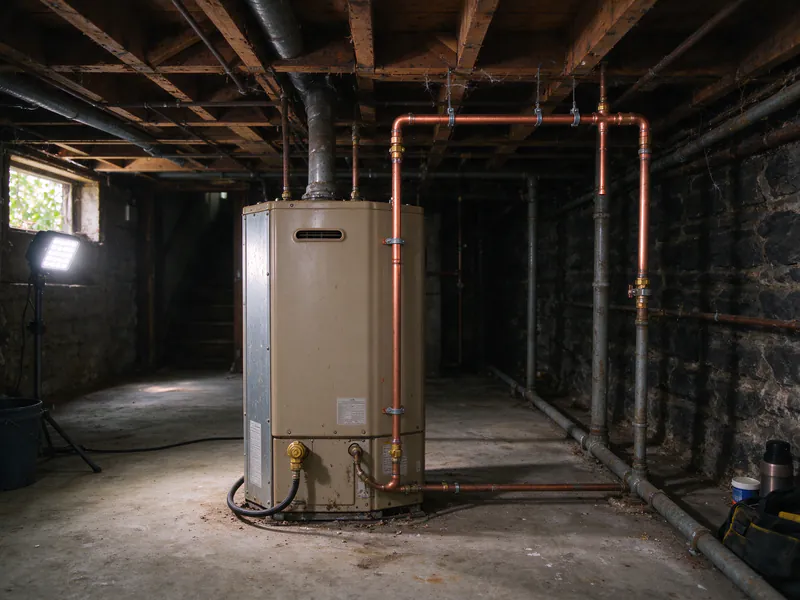
- Hot side only. In galvanized houses the hot lines often corrode faster than the cold, because heat speeds the reaction. Replacing the hot side can restore hot-water flow while the cold side keeps working for now.
When it does not
A partial repipe is the wrong scope when corrosion is spread through the house, when leaks keep moving from room to room, or when the boundary would leave restricted pipe upstream of the new work. New pipe downstream of choked steel still gets choked water, so a new bathroom fed by a corroded riser will not flow better. In those cases the money goes into openings and transitions that a whole-house repipe would have covered once, and the owner faces the same openings again later. The guide to low water pressure in Philadelphia explains why pressure problems often sit upstream of where they show.
Low flow can also come from outside the pipe entirely: a small or corroded service line, a main shutoff that restricts flow, a pressure-reducing valve or clogged fixtures. Those are checked before any boundary is drawn, and a partial repipe is not sold as a pressure fix.
Permit, testing and pricing
Replacing water piping in Philadelphia needs an L&I permit. For a one- or two-family dwelling, L&I lists $37 for repair or replacement of water lines with no fixtures, or $126 in other occupancies; work that adds or reconnects fixtures may fall under the alteration fee instead, and the Philadelphia repipe permit guide explains the difference. The new section is pressure tested before walls close, and the old pipe it connects to is checked for leaks at the new joints.
There is no published price range for partial repiping, because the boundary differs on every job. Length of pipe replaced, fixtures served, floors climbed, transitions, plaster or tile access and patching set the price. The repiping cost guide for Philadelphia compares partial and whole-house scopes by driver.
Related resources
- How to identify your water pipes before deciding what stays
- Repipe vs pipe lining for sections that are not yet leaking
- Do I need a repipe?, a short check of the signs
- PEX repiping for the material most partial jobs use