Low water pressure can start anywhere between the street and the tap: the service line, a partly closed or failing valve, a pressure-reducing valve, clogged fixtures, or galvanized pipe narrowed by corrosion inside the house. A gauge reading at the meter separates a supply problem from an interior one. A repipe only fixes the interior one.
Philadelphia Freedom Repipe offers and manages galvanized pipe replacement and main water shutoff replacement across Philadelphia and nearby Delaware, Montgomery and Bucks County suburbs. Weak flow is the most common reason people ask about a repipe, and in an old house it is often the right answer. Often is not always, so this guide works through the causes in the order the water meets them.
Pressure and flow are different things
Static pressure is the push in the water when nothing is running. Flow is how much water actually arrives when a tap is open. An old house can have reasonable static pressure and still have poor flow, because a narrow, rough pipe loses pressure as water moves through it. That is why a shower that seems fine on its own fades when someone opens a tap downstairs: the pipe cannot carry both demands at once.
Height adds to it. Every foot the water climbs costs a little pressure, so in a three-story rowhouse the top-floor bathroom always sees less than the basement laundry. Old pipe makes that gap larger.
Start at the meter
There is no published Philadelphia Water Department figure for typical street pressure, and pressure varies across the system, so the useful number is the one at your house. A plumber reads static pressure with a gauge on a hose bibb or laundry faucet near the meter, with every fixture off, then checks flow at the lowest and highest taps.
- Low static pressure at the meter points to the supply: the street, the service line or the valves at the entry. Interior piping cannot be the cause of a low reading taken before it.
- Good pressure at the meter, poor flow upstairs points inside the house: the pipe, the valves along it or the fixtures.
That one reading prevents the most expensive mistake in this subject, which is replacing the house piping to fix a problem that starts outside it.
Causes before the house piping
The service line. In Philadelphia the owner owns the whole service line from the main to the house. Most current service replacements are 3/4 inch: of 2,555 L&I service-line permits over three years, 2,022 specified 3/4 inch and 112 specified 1 inch. An old line that is undersized, crushed or corroded restricts everything downstream, and replacing it is separate work from a repipe. The lead service line replacement page covers that job.
The curb stop and meter valves. A valve near the curb or at the meter that was partly closed during past work, and never fully reopened, cuts flow to the whole house. The curb stop guide explains who operates it.
The main shutoff. Many older houses have a globe-style main shutoff. Its internal path turns the water through a seat, and an old one with a worn or detached washer can restrict flow even when the handle is fully open. A ball valve opens to a full bore. The main water shutoff replacement page covers the swap, which needs the curb stop closed.
A pressure-reducing valve. Where a PRV sits on the supply, a low setting or worn internals can choke the house. A gauge on each side shows it. L&I’s EZ permit standards require thermal expansion control wherever a PRV, check valve or backflow assembly is on the incoming supply, so a PRV change can bring an expansion tank with it.
Causes inside the house
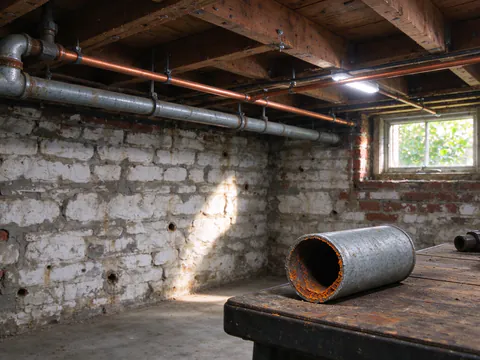
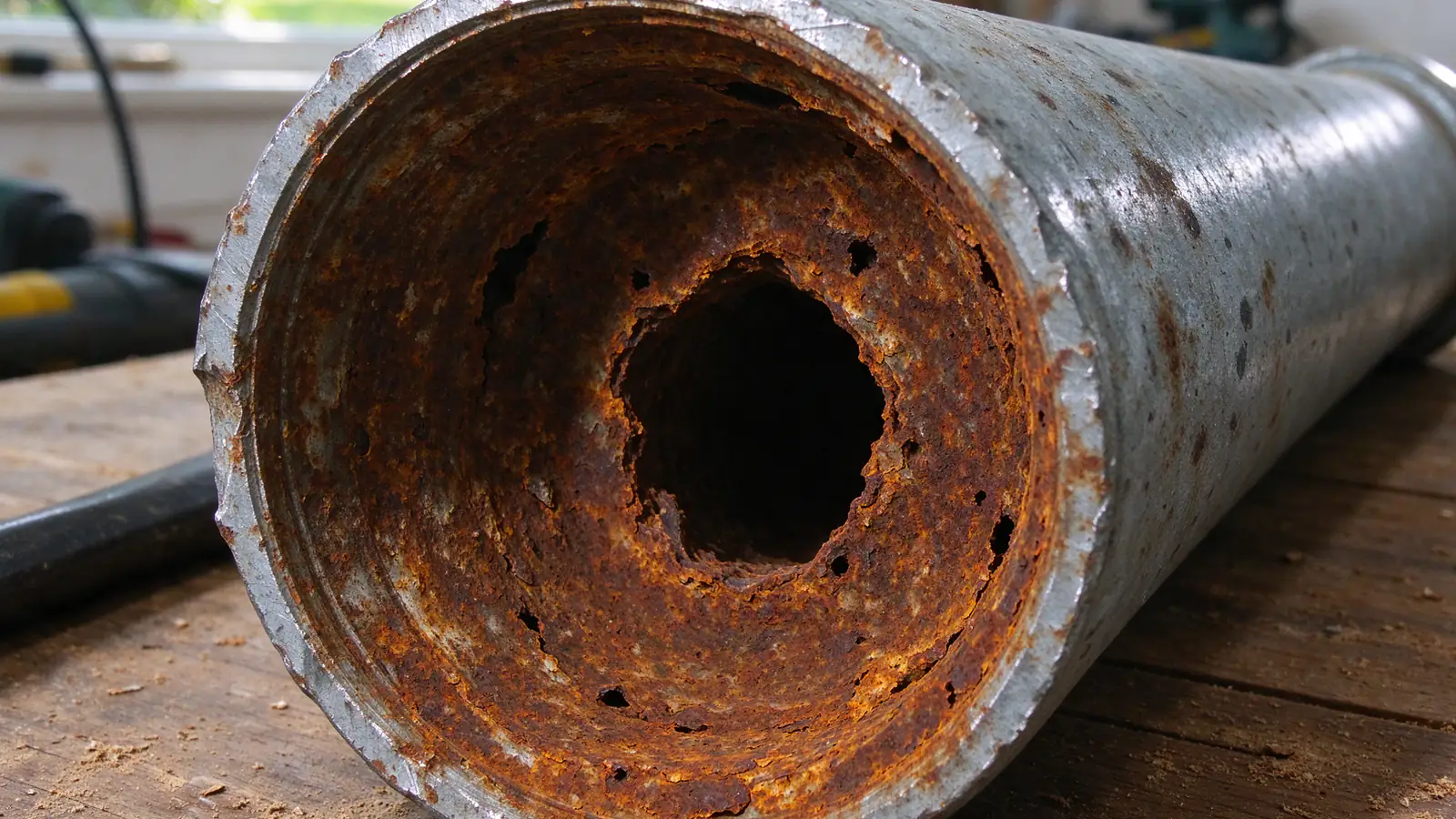
Galvanized pipe. Galvanized steel corrodes on the inside once its zinc coating wears through, and rust and mineral scale build up in rough layers that narrow the bore. The outside can look fine for decades. The signs are weak flow at the upper floors, fading when two fixtures run, and discolored water after the supply has been off. Hot lines usually close up faster than cold. The guide to identifying your water pipes shows how to confirm what you have.
Partial old pipe. Many houses have new copper or PEX at a remodeled bath fed by the original galvanized riser. The new section cannot deliver more than the old pipe feeding it.
Fixtures. A clogged aerator, a scaled showerhead or a worn cartridge restricts one fixture only. If one tap is weak and the next one is fine, start there.
The water heater. Weak hot water with normal cold points to the heater: its valves, sediment at the connections or the hot lines leaving it.
When a repipe helps, and when it does not
A repipe fixes restriction in the house piping. If the meter reading is healthy, the valves are open and sound, the fixtures are clear and flow still collapses upstairs, galvanized pipe is the likely cause, and replacing it restores the bore. If the reading at the meter is low, a repipe will not raise it, and the service line or the supply comes first.
Some houses need both, and the order matters: planning the service line and the interior together avoids connecting new pipe to a line about to be dug up. Philadelphia Freedom Repipe replaces corroded supply piping after a walk-through that reads pressure and flow at the meter and the fixtures before anything is priced. The old water pipes guide and the repiping cost guide cover what follows.