Philadelphia Freedom Repipe replaces main water shutoff valves in Philadelphia rowhouses, twins and detached houses, and in nearby Delaware, Montgomery and Bucks County suburbs. The main shutoff is the valve just inside the house, usually near the water meter, that stops water to everything. It is also the valve most owners never touch until a pipe bursts, which is when they find out it will not close.
A valve that will not close is more than an inconvenience. It means every leak becomes a flood until someone reaches the curb stop under the sidewalk, and it means no plumber can work on anything downstream without a shutdown from outside. Licensed and insured contractors carry out the work; inside the city, a Philadelphia licensed master plumber oversees the job and pulls the L&I permit.
What the main shutoff does, and what sits around it
Water reaches a Philadelphia house through the service line, which runs from the ferrule at the water main in the street, through the curb stop under the sidewalk, and through the front foundation wall into the basement. L&I’s own service line permits describe the route that way: “curb stop to water meter inside home” and “sidewalk to front wall” are common scopes. Inside, the line reaches the meter and the main shutoff, and from there the interior piping begins.
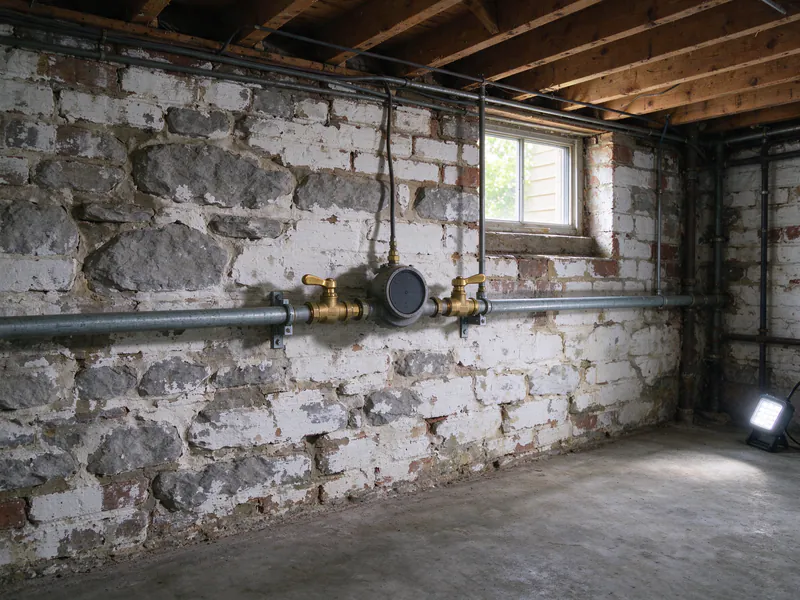
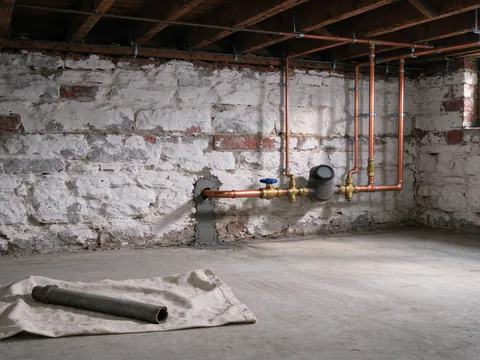
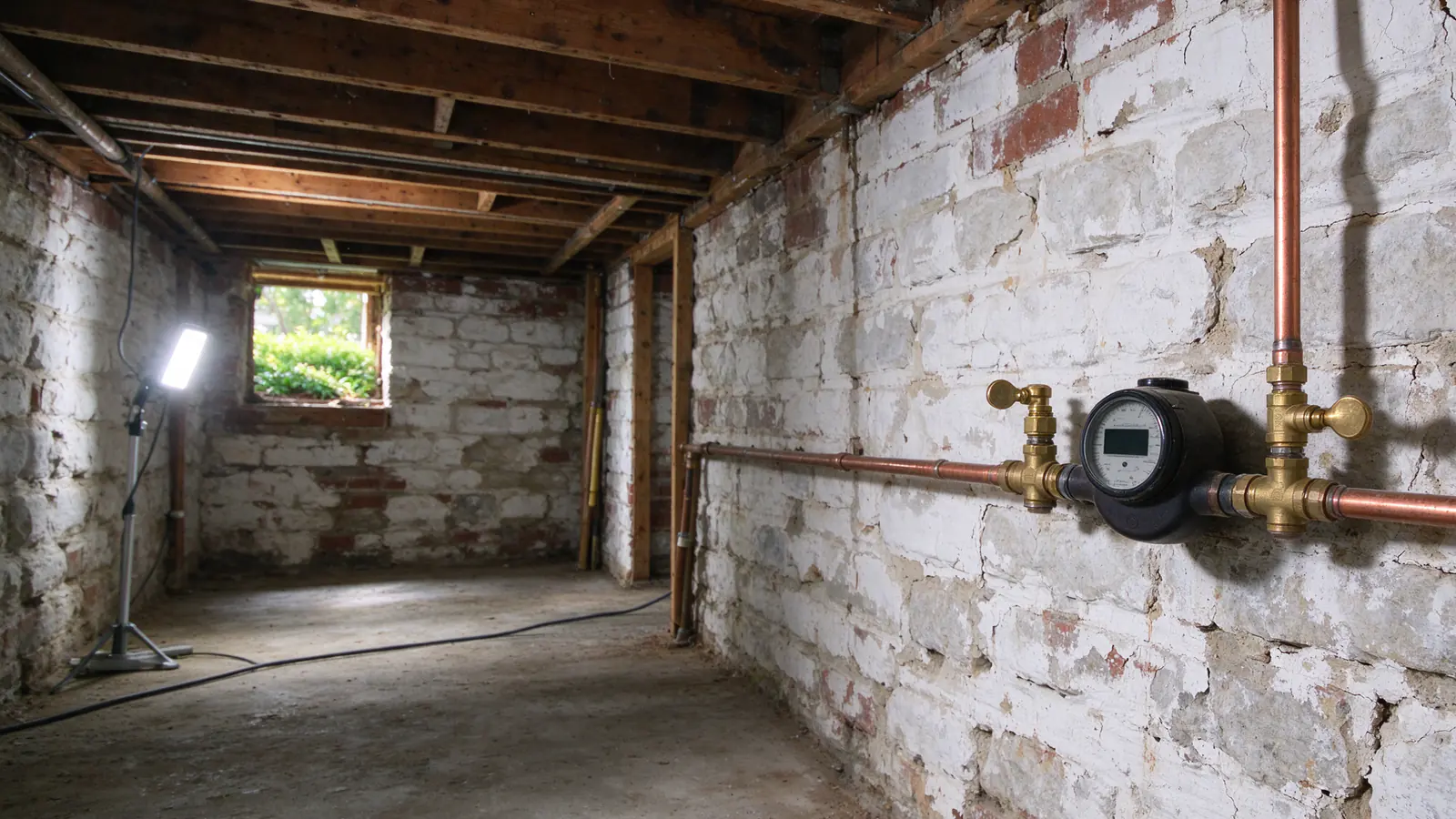
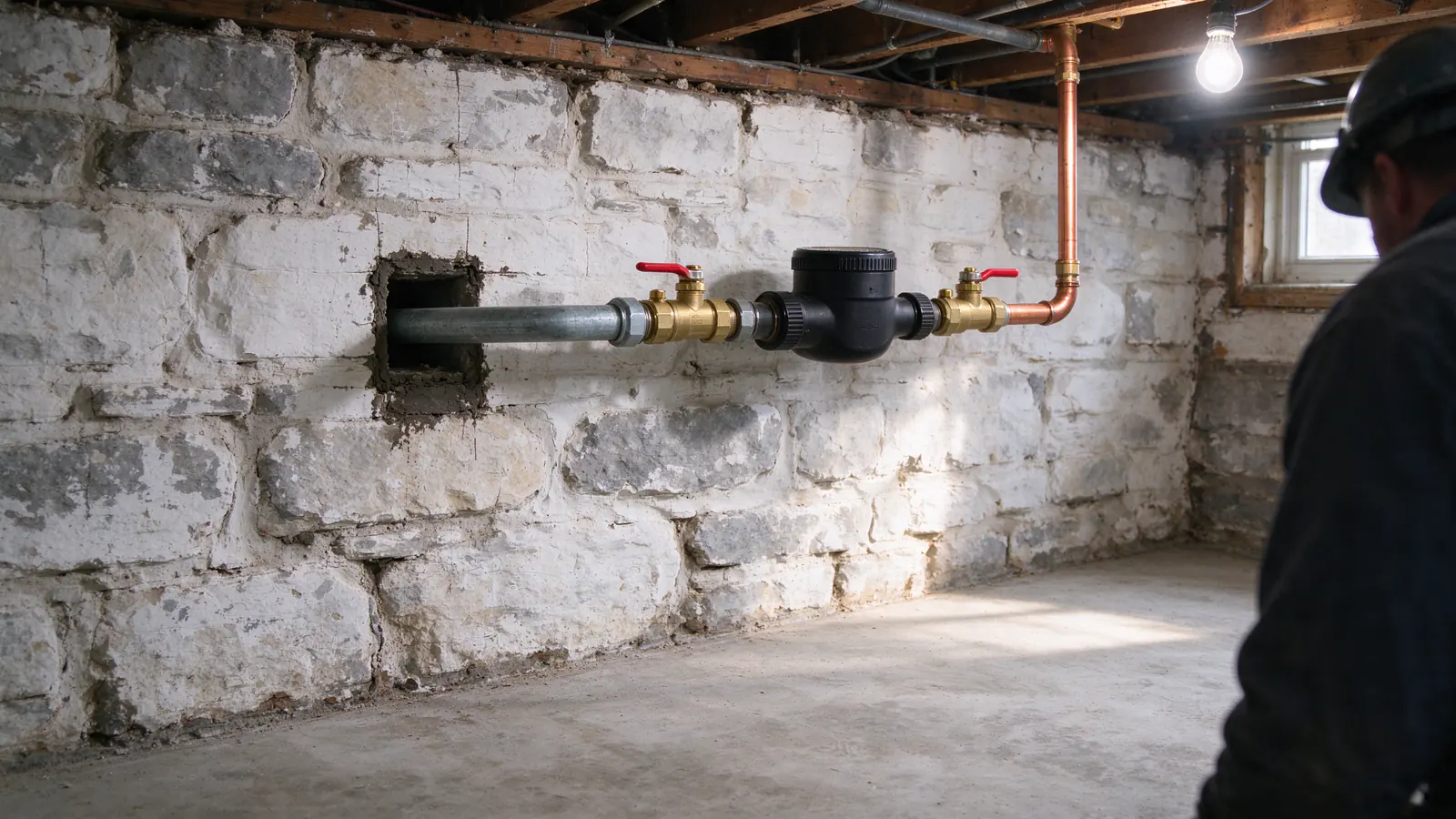
Between the foundation wall and the first branch there can be four or five parts, each of which can fail on its own: a short run of pipe through the wall, a valve on the street side of the meter, the meter itself, a valve on the house side of the meter, and sometimes a pressure-reducing valve or check valve. A walk-through starts here because the condition of these few feet decides what the rest of a plumbing job can count on. The whole-house repiping page explains how the interior system starts from this point.
Philadelphia’s code amendments also name a full-open valve at the building entry as the point where pipe not rated for underground water service must stop, so the valve at the wall is not only a convenience. It marks a boundary in how the pipe on each side is regulated.
Gate valves, ball valves and why old ones seize
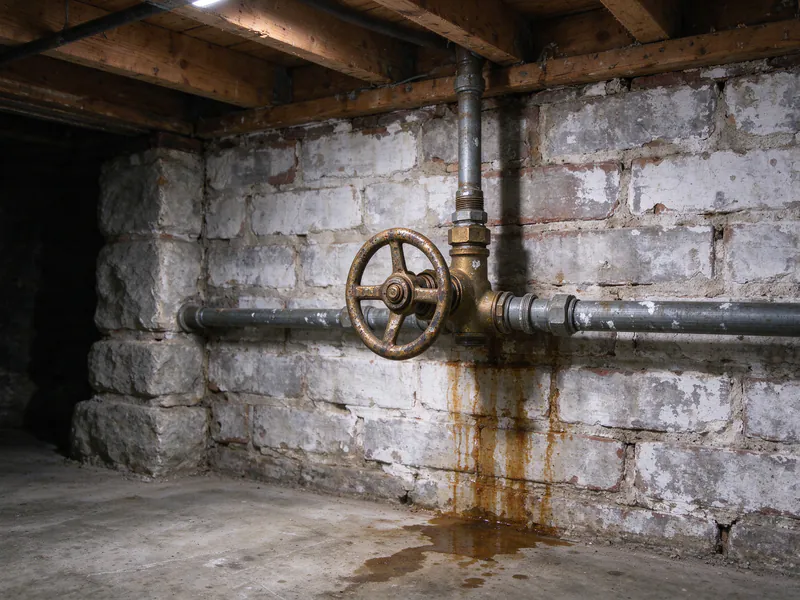
Most main shutoffs in older Philadelphia houses are gate valves. A gate valve closes by driving a wedge-shaped gate down across the pipe on a threaded stem, which takes several turns of a round handle. Left untouched for decades in hard water, three things go wrong. Scale and corrosion lock the stem threads, so the handle will not turn. The packing around the stem dries out, so the valve weeps when it is finally moved. Or the gate separates from the stem, so the handle turns freely and nothing closes.
The Philadelphia Water Department’s tap water runs moderately hard to hard depending on the treatment plant, about 6 grains per gallon from the Baxter plant and 9 to 10 from the Schuylkill plants. Hardness is one reason a valve that sits open for years builds deposits on the seat and stem. Forcing a seized gate valve with a wrench can crack the body or snap the stem, which turns a stuck valve into a leak with no way to stop it.
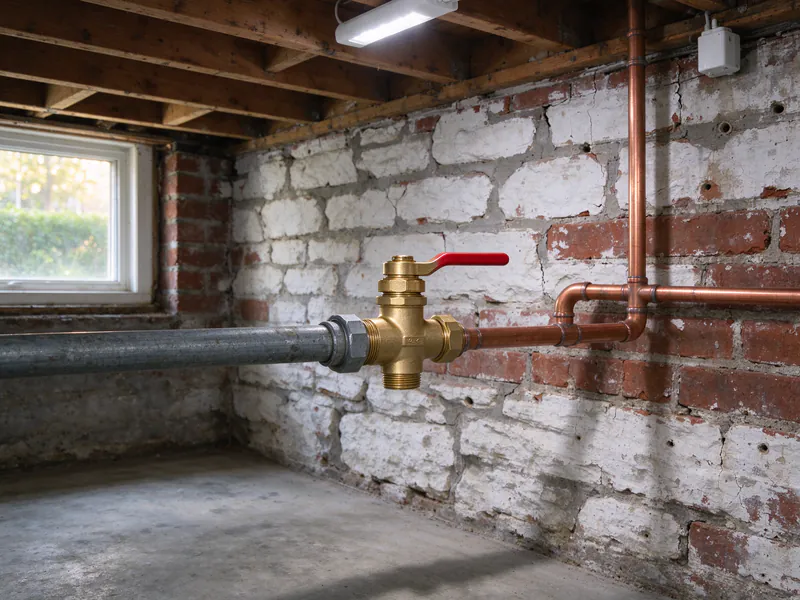
A full-port ball valve is the usual replacement. It closes with a quarter turn, the lever shows at a glance whether it is open or shut, and a full-port ball leaves the bore the same size as the pipe, so the valve does not become a flow restriction. A ball valve is not maintenance-free either; it should be turned closed and open a couple of times a year so it does not set in place.
Replacing the valve usually means cutting it out of the pipe and joining the new one with soldered, press or threaded connections, depending on the pipe on each side. If the pipe at the wall is old galvanized steel or lead, the threads or the pipe wall itself may not survive the work, and the scope grows. That is why the quote should say what happens if the pipe beside the valve proves too weak to reconnect to.
The curb stop belongs to you
In Philadelphia, the owner owns the whole service line. The Philadelphia Water Department states that residential water service lines are owned entirely by the property owner, including the curb stop, which “remains part of your service line”. PWD’s Rates and Charges go further: the owner installs and maintains all piping after the ferrule at the main.
That matters for a main shutoff job because replacing the inside valve needs the water off from outside. If the curb stop closes, the work is straightforward. If it is buried, filled with soil or seized, the job changes. PWD’s own price list shows what curb stop work costs when PWD does it, in situations such as a shutoff for nonpayment or a Notice of Defect that was not addressed:
| PWD charge (Rates and Charges, section 6.4) | Amount |
|---|---|
| Operate a service valve, 2 inches or smaller | $105 |
| Curb stop obstructed, needs excavation | $825 |
| Obstructed curb stop with footway paving | $835 |
| Inoperable curb stop, new curb stop installed | $865 |
| New curb box with paving | $875 |
| Excavation and shutoff at the ferrule at the main | $1,680 |
These are PWD’s figures for its own work under its Rates and Charges, effective September 1, 2026. They are not what a private contractor charges, but they show where the cost sits when a curb stop has to be dug up. PWD also lists a $375 service charge for a temporary main shutdown so a registered plumber can repair a broken service, which avoids opening the street. The curb stop guide and the guide to who owns the water line in Philadelphia cover the outside end in more detail.
The main line from the foundation wall
The few feet of pipe between the foundation wall and the meter are part of the service line in PWD’s terms, and in a pre-1950s house they can be lead or galvanized steel. L&I records show what most Philadelphia services are: of 2,555 water service permits over 36 months, 2,022 specify a 3/4-inch line and 112 specify 1 inch. A main shutoff job is a good moment to check what that pipe is made of. A lead service line shows as dull gray, soft metal that scratches shiny and does not attract a magnet; galvanized steel attracts one.
If the pipe through the wall is lead, replacing only the valve leaves the real problem in place. Philadelphia Freedom Repipe treats that as a separate scope covered on the lead service line replacement page, because the line runs to the street, belongs to the owner the whole way, and has its own permit and its own programs. If the line is galvanized, PWD’s programs treat it alongside lead, and the same page explains why.
On the house side of the meter, a corroded section of main between the meter and the first branch can be replaced with the valve. That is a partial repiping scope in miniature, and the quote should name the transition where new pipe meets old.
When a pressure-reducing valve belongs on the main
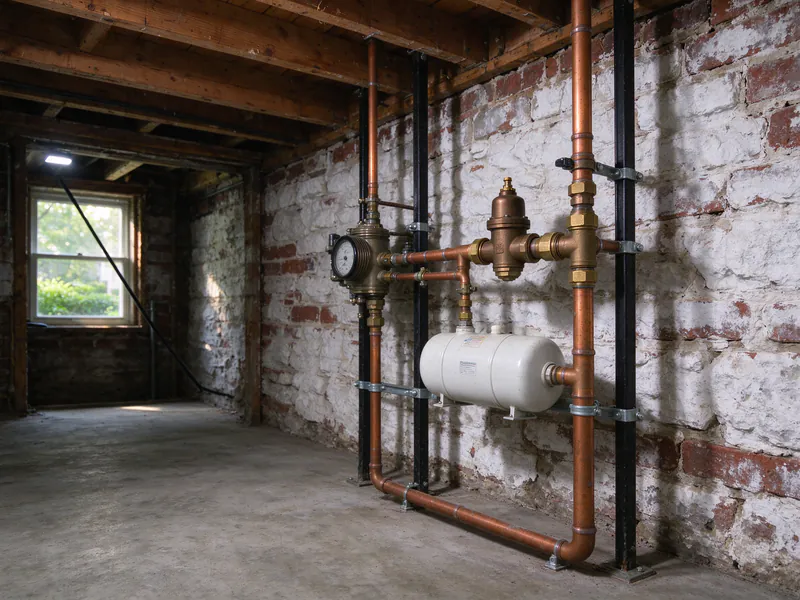
The Philadelphia Water Department does not publish a typical street pressure, so no general statement about whether city houses need a pressure-reducing valve holds up. The answer comes from a gauge on a hose bibb or test point at the house. If static pressure reads high, a PRV after the main shutoff protects fixture valves, appliance hoses and new pipe from it. If pressure reads normal, a PRV adds a part and a restriction for no gain.
Where a PRV, check valve or backflow assembly is on the incoming supply, Philadelphia’s code section P-501.9 requires thermal expansion control, because heated water has nowhere to go once the supply is closed off. That usually means an expansion tank near the water heater. An old PRV can also be the cause of low pressure, not a cure for high pressure: a failed or misadjusted PRV restricts the whole house, and replacing it can change flow more than any amount of new pipe. The guide to low water pressure in Philadelphia sets out how to tell the causes apart.
Permit and what the work includes
Replacing plumbing in Philadelphia needs an L&I permit; only minor same-material repairs and stopping a leak are exempt. A licensed master plumber oversees the work. Which fee line applies to a valve and main replacement is L&I’s call; for repair or replacement of water lines L&I lists $37 for a one- or two-family dwelling and $126 in other occupancies. The Philadelphia repipe permit guide covers how permits are filed. In the suburbs, each township or borough’s own permit and contractor rules apply.
A main shutoff replacement ends with a test: the new valve is closed, a faucet is opened on the lowest floor, and the flow stops. The valve is labeled, and the owner is shown where it is and how it turns. If a whole-house repipe is planned, doing the main shutoff as part of it avoids a second shutdown, and the repiping cost guide lists the main shutoff among the parts that move a repipe price.
Not sure what is between your wall and your meter?
A walk-through identifies the valve, the pipe through the wall and what it would take to make the house shut off cleanly.
Related resources
- Rowhouse repiping, where the main usually enters through the front wall
- Old water pipes in Philadelphia homes, for telling lead, galvanized and copper apart
- How to identify your water pipes with a magnet and a coin
- Philadelphia water Notice of Defect, when PWD flags exterior plumbing
- Galvanized pipe replacement when the steel continues past the meter into the house