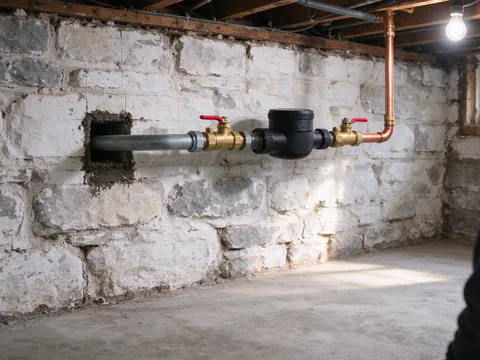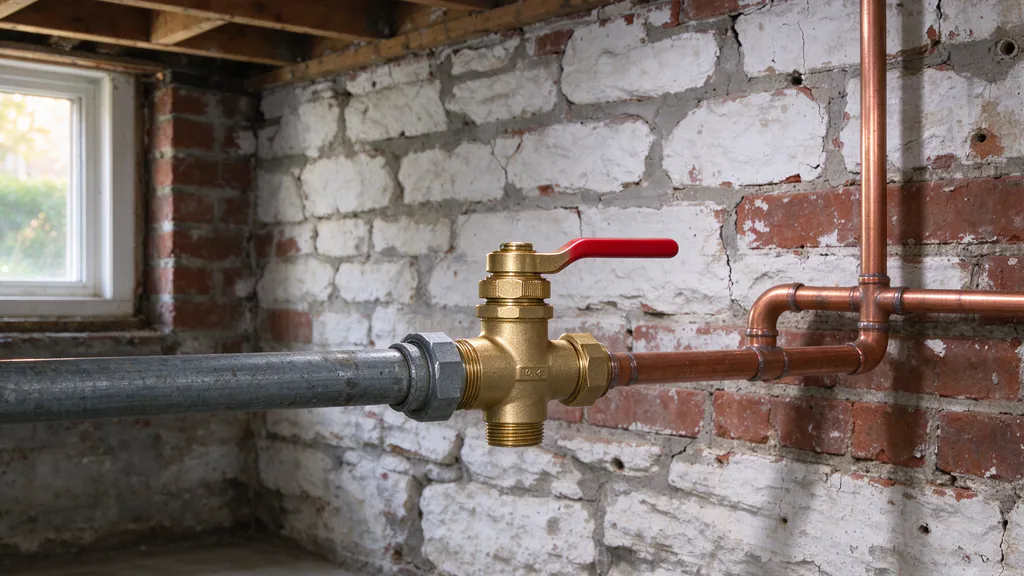
A curb stop is the shutoff valve on the water service line, usually under the sidewalk near the curb, reached through a small box with a cover at the surface. It shuts off water to the whole house from outside. In Philadelphia it is part of the owner’s service line, so keeping it working is the owner’s job.
Most owners never think about the curb stop until a job needs the water off before the main shutoff inside the house, and then it matters a great deal. Philadelphia Freedom Repipe offers and manages main water shutoff replacement and service line work in Philadelphia, and on both jobs the curb stop is often the first question.
Where the curb stop sits
A Philadelphia water service runs from the ferrule on the main under the street, along the service line to the curb stop, and on under the sidewalk and through the front wall to the meter and main shutoff in the basement. The curb stop is the one valve outside the house. Above it, a curb box or valve pipe rises to a small cover in the sidewalk, so the valve can be turned from the surface with a long key without digging.
The curb stop is part of the line on paper as well as in the ground. Philadelphia’s plumbing code defines the private water distribution pipe as running “from the curb stop or curb line to the structure”, and PWD’s service line page says the curb stop “remains part of your service line”. L&I’s service line permits reflect the same layout: of 2,555 service line permits over three years, 753 mention the curb or curb stop, with scopes such as “from curbstop to water meter inside home”.
Why the owner is responsible
PWD says residential service lines in Philadelphia are owned entirely by the property owner, and that includes the curb stop. PWD’s Rates and Charges put the owner in charge of all piping after the ferrule on the main. So a curb stop that is buried, offset, seized or broken is the owner’s to deal with. Owners report asking PWD to turn the curb stop and being told to hire a plumber, and being told the curb box is theirs too. The who owns the water line guide covers the whole boundary.
Why a plumber is called to operate it
The curb stop is not designed to be turned often, and many have not been turned in decades. A valve that has sat in wet soil for that long can be stiff, corroded or partly seized, and forcing it can snap the operating nut or the valve stem. Once that happens the valve cannot be reached from the surface any more, and the only way to it is digging. That is why the curb stop is usually left to a plumber, who arrives with keys for different boxes and depths, checks whether the box is plumb over the valve, and can tell when a valve should not be forced.
The size of the key depends on the valve and the box rather than on one city standard, which is why owners asking for “the right size” get different answers. Owners also report boxes that are buried under paving, filled with soil, or offset so a key cannot reach the valve.
When the curb stop is buried, offset or will not turn
PWD publishes what it charges for its own curb stop work when it shuts off or restores service for non-payment or a Notice of Defect that was not complied with. These are not the price of a private repair, but they show the scale of each kind of problem:
| Situation | PWD charge |
|---|---|
| Operate a service valve, 2 inches or smaller | $105 |
| Curb stop obstructed, needs excavation | $825 |
| Obstructed curb stop plus footway paving | $835 |
| Inoperable curb stop, new curb stop installed | $865 |
| New curb box plus paving | $875 |
| Excavation and shut-off at the ferrule on the main | $1,680 |
The pattern is clear: once a curb stop cannot be turned from the surface, the work moves underground and costs climb. A private curb stop replacement is a service line job, with an L&I permit for the line from the curb stop into the building, listed at $126, and a Streets Department footway permit for the sidewalk, issued with the plumbing permit.
If digging still does not shut the water off
Owners ask what happens if a plumber digs down to the curb stop and it still will not close. The usual answer is a new curb stop, and installing it needs the water off further upstream, at the main. PWD can shut off at the ferrule on the main, which its rates list at $1,680 in shut-off cases, or a registered plumber can arrange a temporary water main shutdown to repair a broken service, listed at a $375 service charge. Which applies depends on the valve, the line and PWD’s process for the case.
Why the curb stop decides a main shutoff replacement
The main shutoff inside the house sits on the same line, just after the meter. To replace it, the water has to be off upstream, and the only upstream valve the owner controls is the curb stop. A curb stop that closes cleanly makes a shutoff replacement a short job. One that will not close can turn it into curb stop work first. That is why a well-scoped main water shutoff replacement checks the curb stop before the date is set, and why a whole-house repiping plan, which usually replaces the main shutoff too, does the same. The living through a repipe guide explains how the water-off windows are planned.
An old globe-style main shutoff and a narrow service can also reduce flow when two fixtures run, which the low water pressure guide separates from interior pipe problems.
How the suburbs differ
Aqua Pennsylvania typically owns the line from the main to the curb stop, and Pennsylvania American Water owns the same stretch in the Norristown area, with the customer owning the rest. Owners who move from the suburbs into the city often expect the utility to handle the curb stop; in Philadelphia it does not. Check your own utility’s rules for Upper Darby, Norristown and other towns on the service areas page.
Before you call
Find the curb box cover in the sidewalk, note whether it is visible, buried or paved over, and check for a Notice of Defect if water is surfacing near it; the Notice of Defect guide covers that letter. Philadelphia Freedom Repipe replaces main shutoffs, curb stops and service lines through licensed and insured contractors; inside the city, a Philadelphia licensed master plumber oversees the job and pulls the L&I permit.