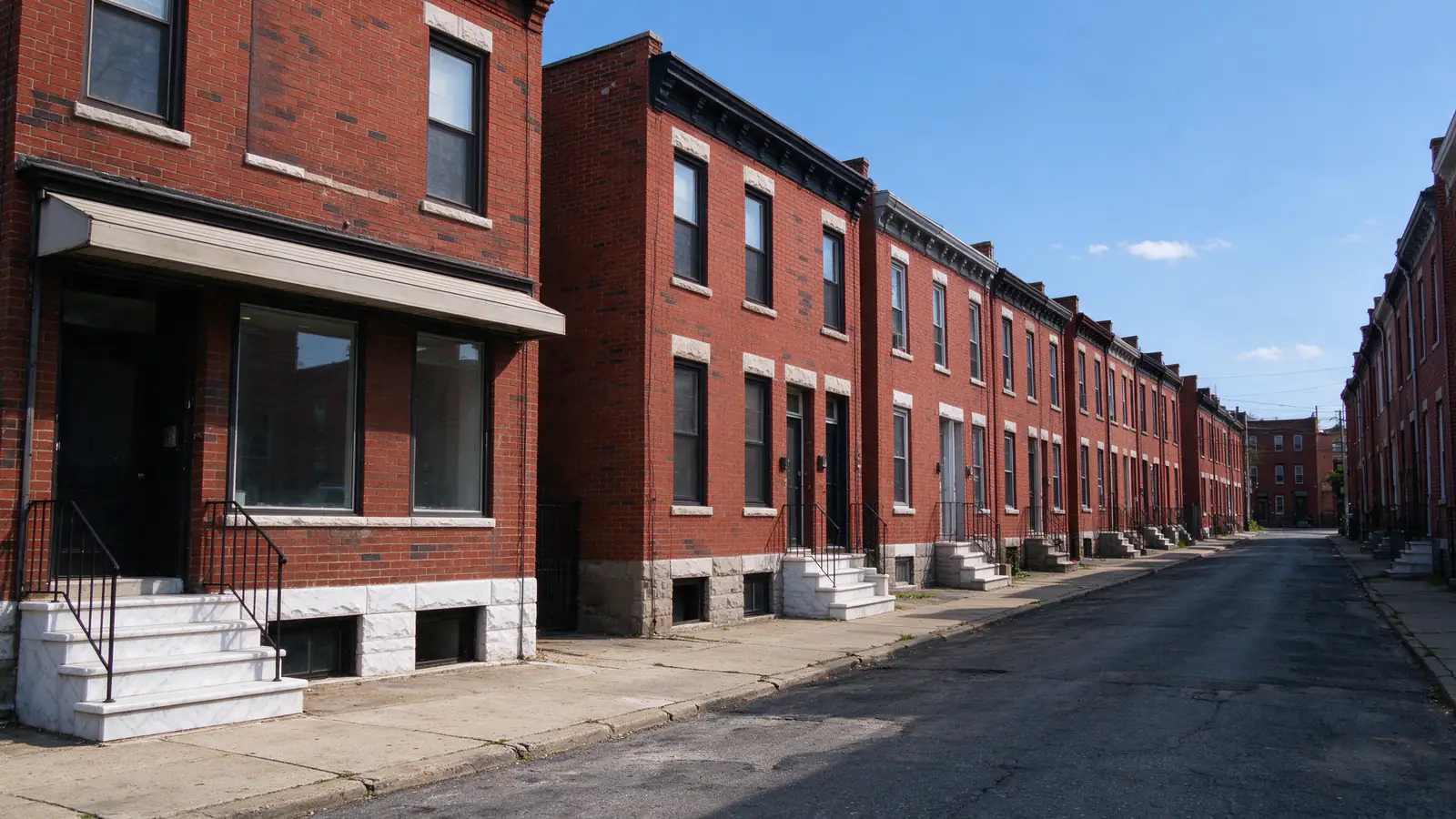
On a South Philadelphia corner, the building with a storefront at street level and an apartment above it plays by a different piping rule than the rowhouse next door. The Philadelphia Plumbing Code accepts plastic water pipe in one- and two-family dwellings and apartments, but requires metallic pipe for water supply that serves or sits inside other occupancies, so one block can call for two materials.
The second difference is on the street side. Philadelphia Freedom Repipe plans and manages rowhouse repiping, whole-house repiping and copper repiping in ZIPs 19145, 19146, 19147 and 19148, none of which is in the Philadelphia Water Department’s free service line pilot. Licensed and insured contractors carry out the work; inside the city, a Philadelphia licensed master plumber oversees the job and pulls the L&I permit. Because the owner pays for the service line here, the decision about it is part of the repipe budget rather than a separate program to wait for.
Which repipe fits which South Philadelphia building
Most houses here are attached. Across these four ZIPs, 68.8% of homes are single-family attached, rising to 77.9% in 19148, by the Census Bureau’s American Community Survey. For a straight rowhouse, the usual scope is new supply from the meter at the front wall to every fixture and the water heater, which the rowhouse repiping page lays out floor by floor. Where only one bath or kitchen is failing, galvanized pipe replacement of those runs is possible, as long as the scope says plainly which original pipe stays in service.
Corner buildings with a shop below are a separate job. The commercial space and any shared piping take metal, and the dwelling units above may or may not, depending on how the supply is split. Commercial repiping covers those buildings, and the PEX versus copper guide explains why neither material is best everywhere. Replacing the line from the curb to the meter is lead service line replacement, a separate permit and a separate price.
How the work moves through a narrow rowhouse
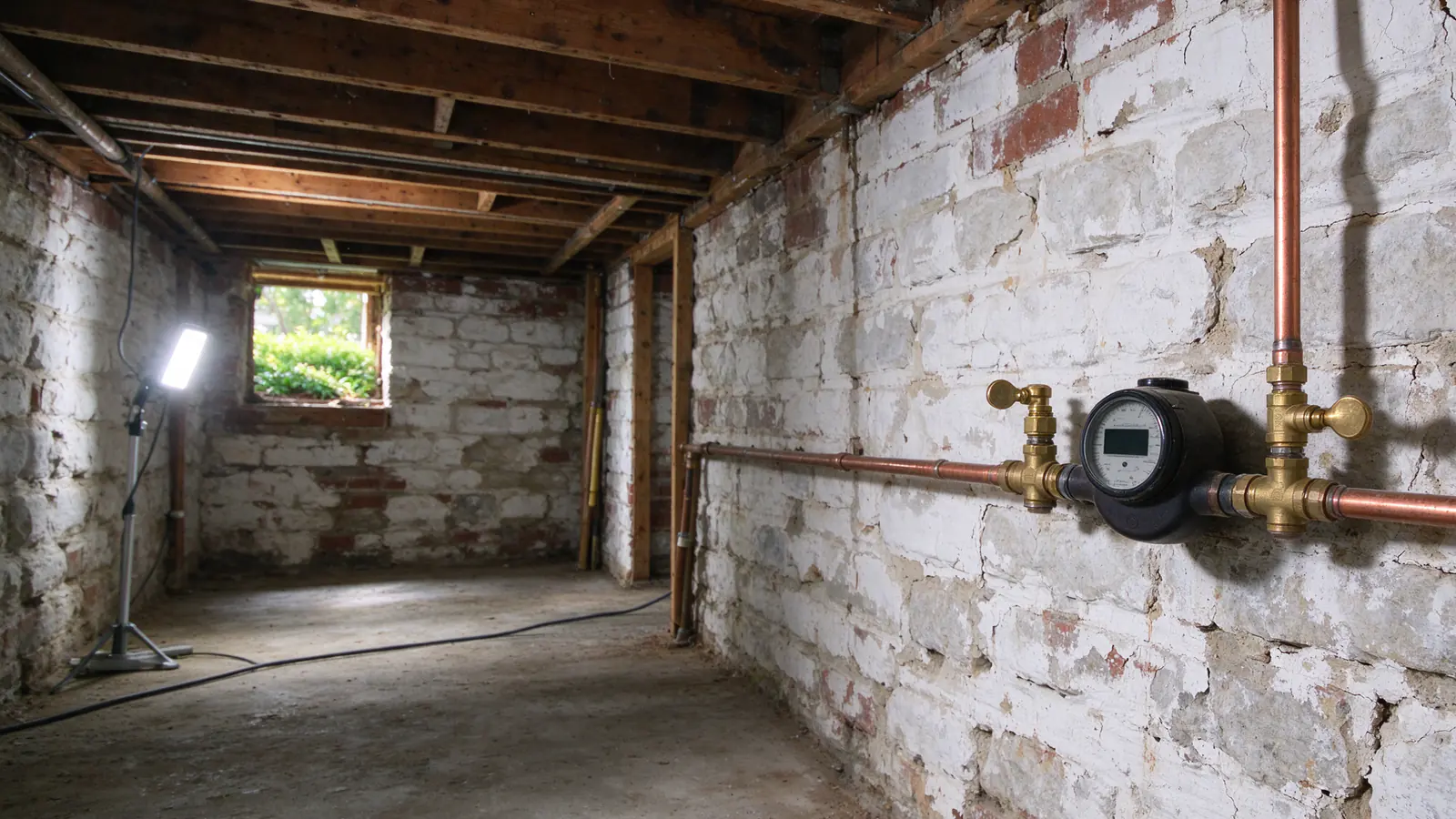
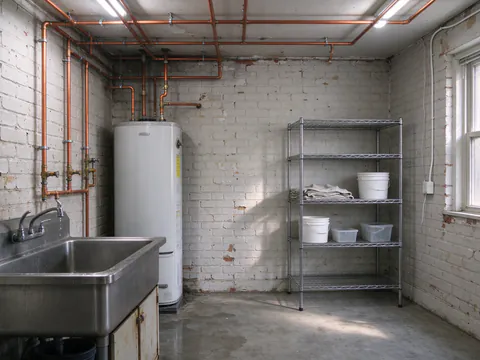
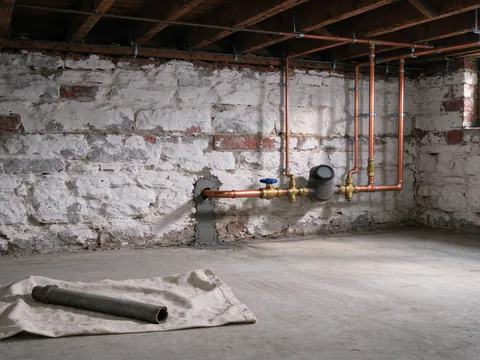
The walk-through starts at the front basement wall, where the service line enters and meets the meter. Its material is noted, since in South Philadelphia a lead or galvanized line is the owner’s cost to replace. Static pressure is read at the basement tap and at the top-floor fixture, and flow is checked with a second tap open. A big drop between floors suggests restriction in the house; weak flow at the bottom suggests the service line, the meter valve or the main shutoff.
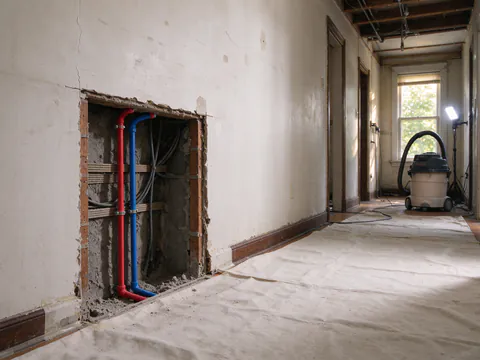
The route upstairs is then mapped. A narrow house leaves few places to run a riser: a closet, the stair wall, or a chase from a past renovation. Plaster walls and tiled baths are marked where openings are likely, and the written scope lists each opening and who closes it; the guide to repiping plaster walls explains how those openings are kept small. After L&I issues the permit, new pipe runs while the old system stays live where it can, the system is pressure-tested and flushed before walls close, shutoffs are labeled, and L&I inspects.
Paying for the street side without the pilot
Outside the pilot ZIPs, a lead or galvanized service line comes down to three routes. The owner can hire a licensed plumber privately; the Philadelphia Water Department estimates that work at $3,000 to $12,000, more when a street opening is needed. The owner can apply for PWD’s HELP loan, a 0% loan repaid over 60 months with a lien on the property, which for a lead line does not require a Notice of Defect. Or, if PWD schedules a water main replacement on the block, it replaces lead and galvanized lines from main to meter during that project at no charge, though those projects reach about 1% of city mains a year.
Each route affects the repipe. A HELP job is inspected and estimated by PWD, so its date is not set by the interior contractor; a private replacement can be booked together with the repipe so the new interior starts at a new meter connection. The lead service line replacement cost guide breaks down that estimate.
Own a rowhouse or corner building in South Philadelphia?
Get a repipe scope that sets out the material rule for each part of the building and where the service line fits.
Corner buildings and the metallic-pipe rule
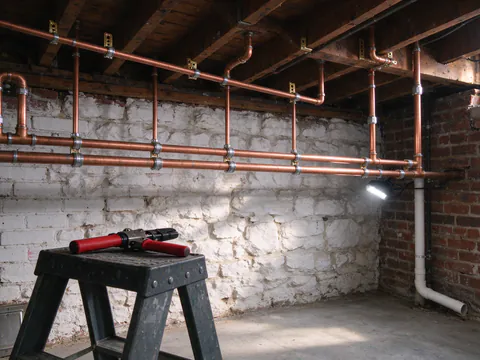
Section P-605.4 of the Philadelphia Plumbing Code, as amended in 2024, says water supply piping supplying or located within occupancies other than one- and two-family dwellings and apartments shall be metallic. In practice, L&I-approved scopes for commercial and mixed-use buildings carry a line stating that all piping for the commercial space shall be metallic, while one- and two-family scopes use PEX. Flexible water connectors are also limited to one- and two-family dwellings and apartments. A corner building with a bakery, bar or store on the ground floor is therefore planned as two systems that meet at the meter.
That split affects price and sequence. Copper takes more labor to run than PEX and needs soldered or press joints, so the commercial share of the building weighs more in the quote. If the dwelling units above are fed through the shop’s ceiling, that path may need metal too, which is why the pipe route is drawn before the material is chosen.
Fifteen repipe permits across four ZIPs
L&I permit records for the 36 months to October 2026 show 15 whole-house water-piping replacement permits in these four ZIPs, and 397 service-line permits. Relative to the number of homes, that is about 1.7 whole-house permits per 10,000, the highest rate of any group of ZIPs in the city, and 19146 alone had 8, tied with 19142 for the highest count. The stock is old: 54.0% of homes across the four ZIPs were built before 1940, and 64.7% in 19148.
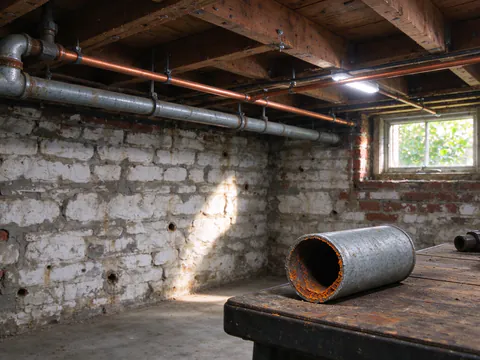
Those figures describe the area and the permits filed, not the pipe in any one house. Many South Philadelphia rowhouses have been renovated, and a house with a new kitchen may already have new supply piping, or may have new pipe only as far as the old riser. The guide to who owns the water line explains where the owner’s responsibility starts, and the curb stop guide covers the valve under the sidewalk.
What drives the order of decisions
The material plan comes first because the code splits it by occupancy, and a corner building priced as all-PEX would not pass. The service line comes next because here it is a cost the owner carries, and folding it into the same project can save a second set of openings at the front wall. A choked service line and a corroded riser feel identical at a third-floor shower, so gauges at the top and bottom of the house settle which one it is. Every opening is written into the scope because plaster and tile are where surprises appear. The Philadelphia repiping cost guide explains how those drivers build a price.