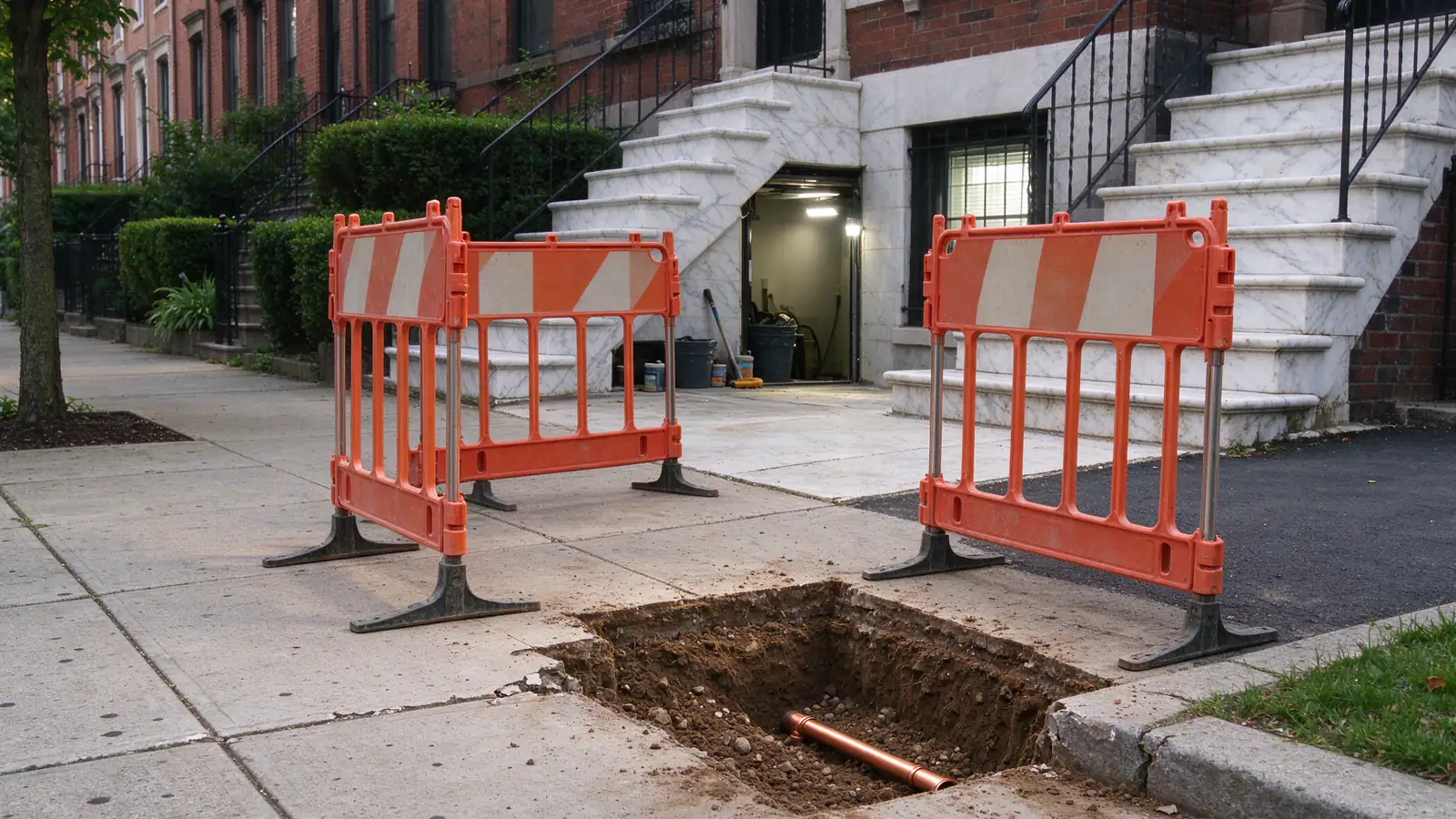
The Philadelphia Water Department’s Service Line Replacement Pilot replaces lead and galvanized water service lines free of charge, one group of ZIP codes at a time. Each phase follows the same pattern: PWD names the ZIP codes, reaches out to owners, gets each owner’s permission, then sends licensed plumbers it has hired to replace the line, usually in one day. Eligibility is decided by PWD, and the pilot is limited by its federal funding, about 1,000 lead lines budgeted.
This post explains how a phase unfolds and what an owner should do at each step. Philadelphia Freedom Repipe replaces interior water piping and offers private service line replacement in Philadelphia; it is not part of the pilot, and the pilot does not use contractors that owners choose. The lead service line replacement page covers private replacement outside the program.
The phases so far
PWD has published two phases, both in neighborhoods with older housing:
| Phase | Area | ZIP codes | Published timing |
|---|---|---|---|
| Phase 1 | North Philadelphia | 19133, 19134, 19140 | Outreach from June 2026, replacements from August 2026 |
| Phase 2 | West and Southwest Philadelphia | 19104, 19131, 19139, 19142, 19143, 19151, 19153 | Starting late 2026 |
Check PWD’s pilot program page and its program details for the current list and dates, because timing can move. The North Philadelphia and West and Southwest Philadelphia pages describe the housing in those ZIPs.
How each phase unfolds
1. ZIP codes are announced. PWD names the ZIP codes in the phase. Which properties within them qualify is PWD’s decision, and the program covers lead and galvanized service lines.
2. Outreach comes to the owner. PWD contacts owners in the phase area. Owners outside the area can register interest, but the pilot moves by ZIP.
3. The owner gives permission. PWD says only the property owner can authorize the replacement. If the house is rented, the people living there should pass any letter or door hanger to the owner.
4. The line is replaced. Licensed plumbers hired by PWD replace the service line. PWD says the work usually takes one day, between four and eight hours. The water is off while the new line is connected.
5. The owner keeps responsibility. After replacement, the service line still belongs to the owner, as every residential service line in Philadelphia does, and its upkeep stays the owner’s responsibility.
What the pilot covers, and what it does not
The pilot replaces the water service line: the pipe from the main under the street to the meter inside the house. PWD values that work, if hired privately, at $3,000 to $12,000.
It does not replace the plumbing inside the house. Galvanized pipe from the meter to the fixtures stays, and so does an old main shutoff unless the replacement touches it. That matters because the Water Department notes that, over decades, lead from a property’s plumbing can collect on the corroded walls of galvanized pipe. A new service line feeding old galvanized interior pipe solves one problem and leaves the other. The guide to old water pipes in Philadelphia homes explains how to tell what is inside.
If interior repiping is also needed, coordinating it with the pilot’s schedule helps: the new service line sets where the main shutoff sits, and the interior repipe connects to it. The whole-house repiping page covers that work.
If your ZIP is not in a phase
The pilot is one of several routes. PWD also:
- Replaces lead and galvanized lines during water main projects on a block, free from the main to the meter. PWD says these projects reach about 1% of the city’s mains a year.
- Offers the HELP loan, a 0% loan for owners of residential properties with four or fewer units, with an operable meter and a water bill not more than two cycles behind. A lead line qualifies without a Notice of Defect, and a lien is placed on the property. The PWD HELP loan guide explains the terms.
- Runs a Service Line Verification Program that checks the line material for randomly selected properties that received a letter, with replacement if lead or galvanized is found. It is limited to those properties and runs only for a set period.
Owner-occupied single-family homes that meet income limits may also qualify for PHDC’s Basic Systems Repair Program for a leaking or broken service line. The free lead line replacement guide compares every route, and the guide to checking for a lead service line shows how to read PWD’s map.
What to do now
- Look up your address on PWD’s service line map. PWD says records listed as incomplete should be treated as a lead service line.
- If your ZIP is in a phase, watch for PWD’s outreach and respond; the owner’s permission is what starts the work.
- If it is not, register interest and price the other routes, using PWD’s own estimate and the lead service line replacement cost guide.
Questions about the pilot go to PWD at ReplaceServiceLine@phila.gov or (215) 683-8825.